
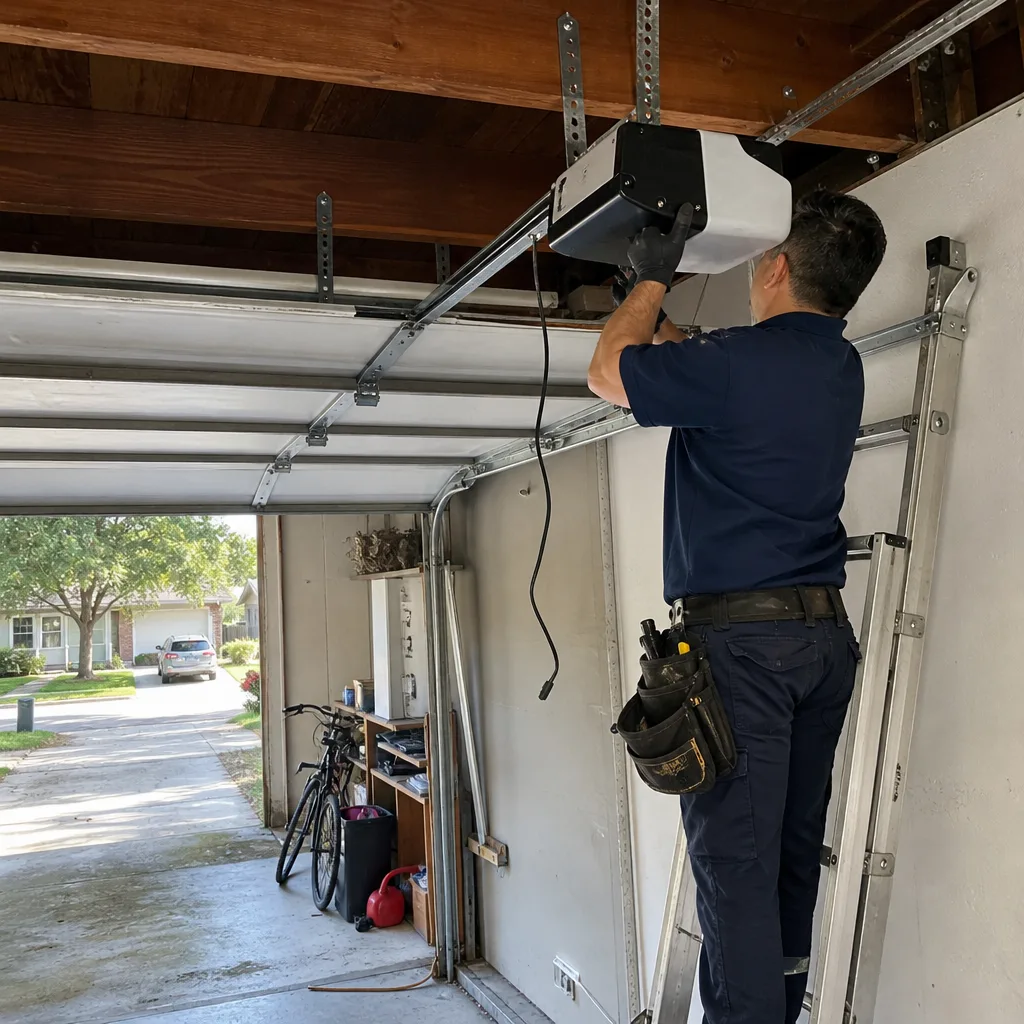
Last updated November 21, 2026
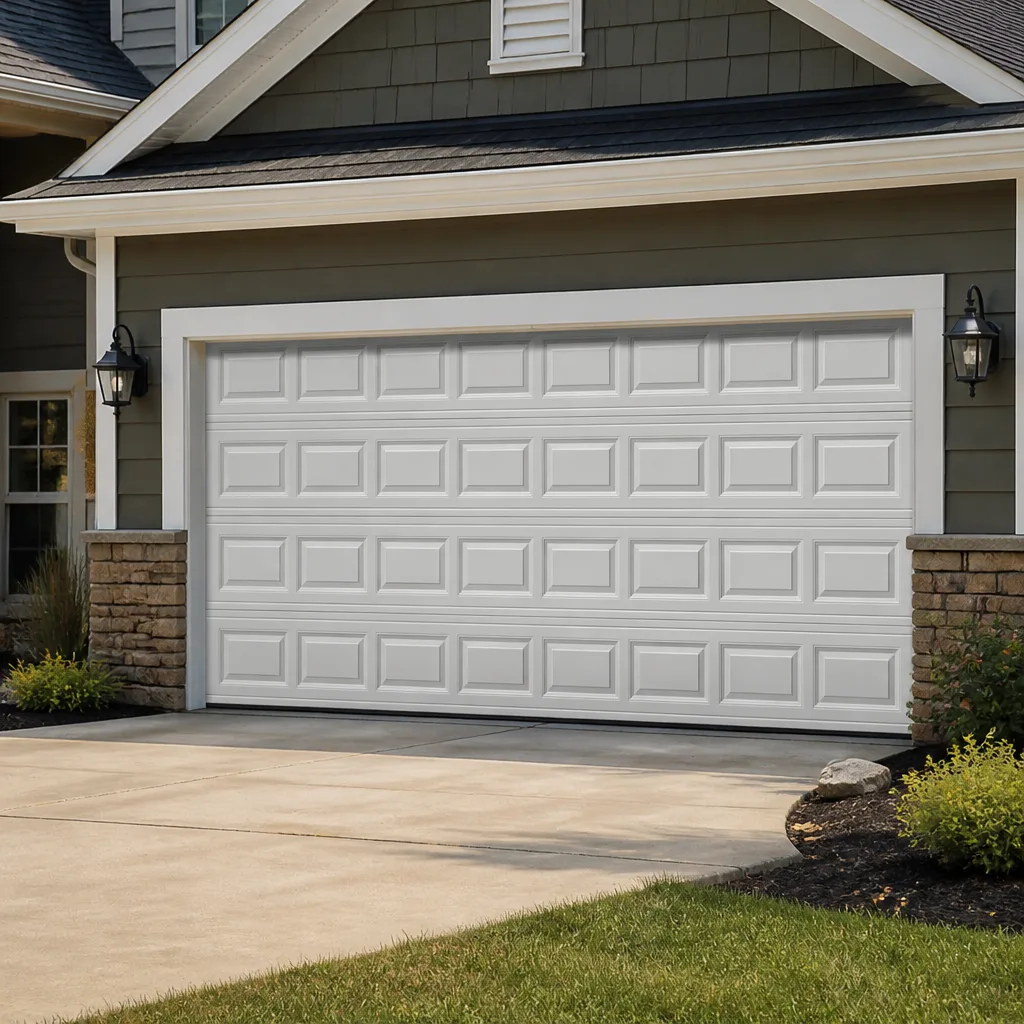 Raised-panel steel
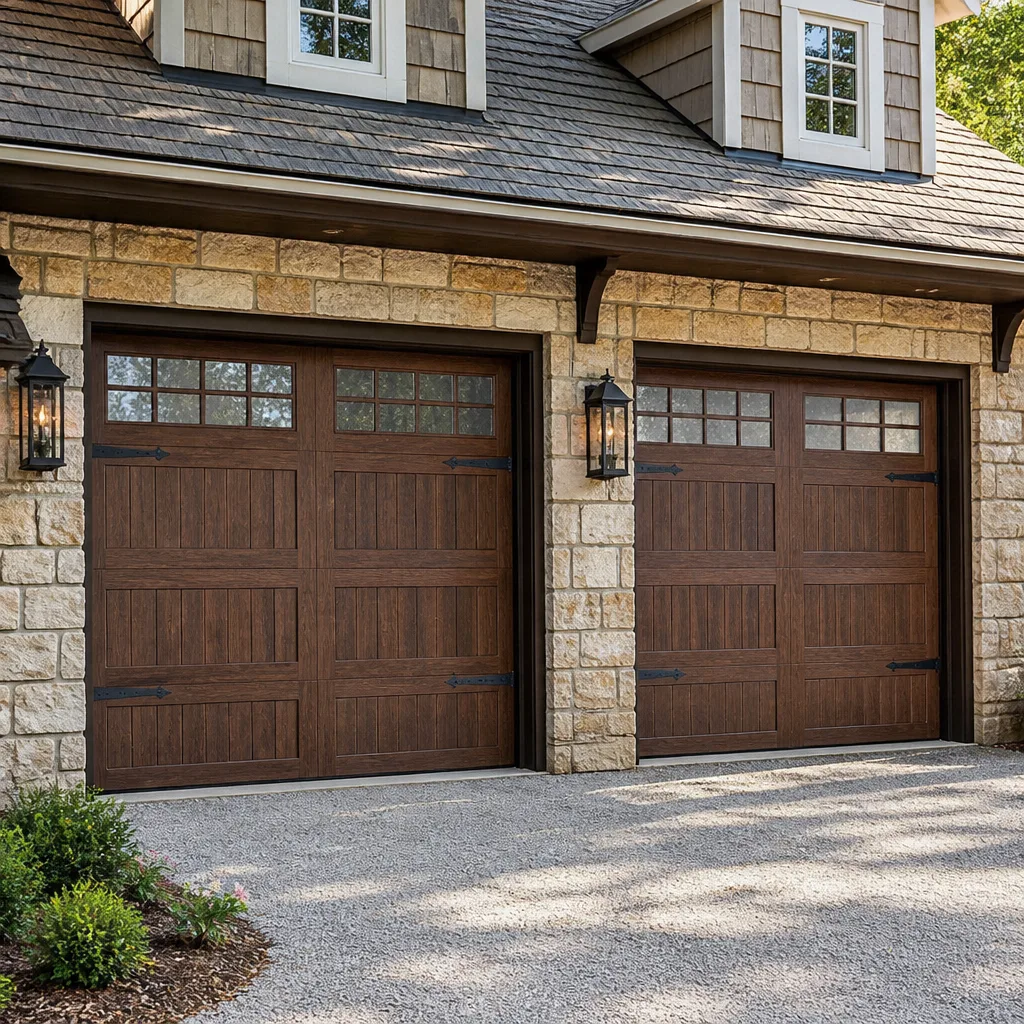 Carriage house
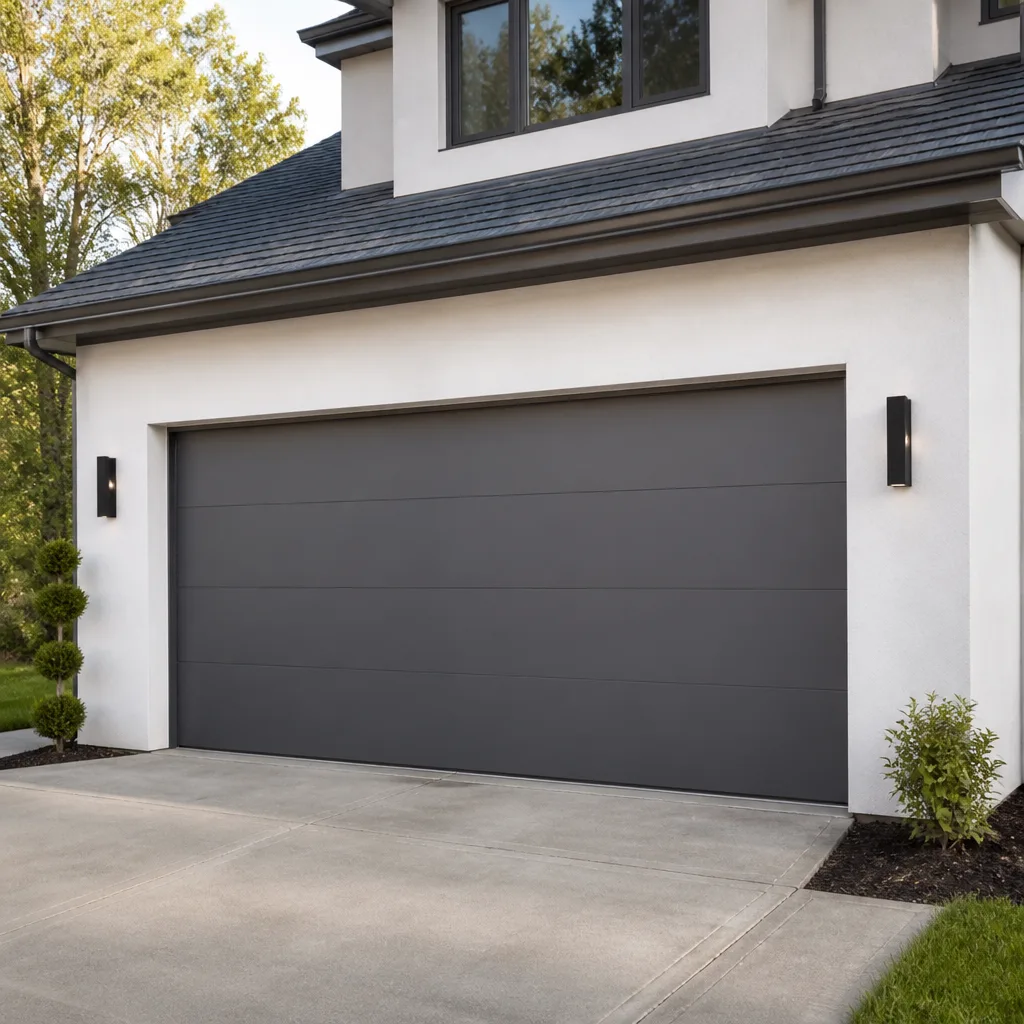 Modern flush
 Full-view glass
 LiftMaster openers
 Chamberlain openers
Full 25-point door and opener safety check with every visit - springs, cables, rollers, tracks, and your LiftMaster or Chamberlain opener included
You get a price before we start. It does not change when the pro arrives.
Get your free estimateGarage Door Permits, Codes & Inspections in Meyerland, TX: What You Need to Know
Houston is one of the few major U.S. cities with no traditional zoning, and a lot of homeowners take that to mean you can do whatever you want to your house. That’s the misconception this guide exists to correct. Garage door replacements here sit at the intersection of the City of Houston’s flood damage ordinance and Harris County’s wind-load standards, and those two sets of rules don’t always agree on what your driveway project needs. We work on garage doors across Meyerland, and the permit question comes up more than any other. Here’s what actually applies to your door, when it applies, and how to protect yourself at inspection and resale.
Quick Answer
A direct swap of a door or opener that keeps the same opening size, same wall, and same door type is generally routine maintenance and doesn’t need a permit. A project that changes the opening dimensions, replaces structural framing, or triggers floodplain or wind-load compliance review may require a City of Houston permit and a documented inspection before it passes. When in doubt, call the City of Houston building department and describe your exact project rather than relying on a contractor’s word that “it’s fine, nobody pulls permits for doors.”
Styles & brands we work with
- Raised-panel steel
- Carriage house
- Modern flush
- Full-view glass
- LiftMaster openers
- Chamberlain openers
Table of Contents
- When does garage door work require a permit in Meyerland?
- Harris County wind-load ratings for garage doors
- Flood damage, FEMA rules, and Meyerland replacement projects
- What a code-compliant installation inspection actually checks
- Protecting yourself at resale: disclosure and documentation
- Opener and electrical code: what’s separate from the door
- How to vet a garage door contractor in Meyerland
- Documents to keep after any garage door project
When does garage door work require a permit in Meyerland?
A permit is generally required when the work changes the structure, the opening, or the building envelope. It is generally not required when the work is a like-for-like replacement of a component. That sounds simple, but the threshold sits in a place most homeowners miss.
Here’s the practical way to sort your project:
- Routine maintenance, no permit: replacing a torsion or extension spring, swapping rollers, hinges, or cables, replacing a worn opener with a same-size same-voltage unit, adjusting track, or replacing weather seals.
- Like-for-like door replacement, usually no permit: removing a door of one size and installing a door of the exact same size in the same opening, same material type, same headroom, no structural changes.
- Permit likely required: widening or narrowing the opening, changing the header, altering the framing, changing door type in a way that affects wind-load rating, raising the ceiling track height, or any project that affects the floodplain compliance of the structure.
- Ask the city directly: any project on a property with prior flood claims, any project involving a door previously damaged by flooding, and any replacement where you don’t know the original permit history.
The categories above are the shape of the rules and reflect how they’re generally applied, not a substitute for an answer from your city’s building department. Rules change, and specific properties have specific histories. One call to the City of Houston building department with your address and your project description will tell you more than any general guide. What we’d ask you to do is make that call before you sign a contract. It’s the cheapest step in the whole project.
Meyerland homes add a wrinkle. Many were built in the same few decades, and many have been rebuilt, renovated, or re-skinned after storm damage over the years. That means the “like-for-like” test gets harder to apply, because the door you have now may not be the door the original permit covered. If you’re unsure, check out our guide to garage door repair for a sense of what counts as repair scope versus replacement scope.
Harris County wind-load ratings for garage doors
Garage doors on Harris County properties are subject to wind-load requirements, and the specific rating a door needs depends on the design wind speed assigned to the structure. The door’s rating must be documented by the manufacturer for the opening width and the design pressure. Your installer shouldn’t be guessing at this. A properly rated door comes with a manufacturer’s label or pressure-rating certificate that states which design pressures the door is rated for, and that certificate is what a plan reviewer or inspector looks for.
What to verify before you sign:
- Ask the installer to show you the manufacturer’s wind-load rating for the exact door model, size, and configuration being quoted. Ratings change with width, height, and strut configuration.
- Ask whether the rated door comes with a label attached to the door or delivered separately as a certificate. Keep the certificate, and photograph the label before it gets painted or covered.
- Ask whether the installation includes any additional reinforcement the rating requires, like struts, heavier hinges, or center brackets. The rating only counts if the door is installed with the components the rating was tested with.
- Ask whether the door’s rating documentation meets the format the City of Houston plan reviewer or inspector accepts for your address. Not every door label reads like what a reviewer wants to see.
Anyone installing a door in Meyerland should be able to hand you the rating documents without digging. If your contractor gets vague about wind-load rating, or waves off the question with “the door’s rated for this area,” that’s a signal to get a second quote. Brand-matter too: a manufacturer like Raynor or Clopay publishes rating documentation for their models, and a specialist working in those lines will know where to find it. We work on the brand already installed in your home, so in a replacement conversation we’re reading the actual rating data for the product, not assuming it.
Flood damage, FEMA rules, and Meyerland replacement projects
If your property has ever filed a flood insurance claim, the replacement of a garage door on that property is not just a door question. That’s the single most overlooked fact among Meyerland homeowners. FEMA’s substantial damage rules apply when a structure is being repaired after damage and the cost of the repairs reaches a threshold percentage of the structure’s value. The precise percentage and how it’s calculated belong to your local floodplain administrator, not to us, so the right move is to ask the City of Houston floodplain management office how your project is classified.
When substantial damage rules apply to a repair, the reconstruction has to meet current floodplain standards rather than the standards the house was built to. That can change what door type, what seal, what elevation details, and what ventilation the replacement needs. It can also change which permits and plan reviews are involved. None of that is guesswork we’d want to do for you over the phone, and it isn’t something an installer can diagnose in the driveway either.
How to sort the question quickly:
- Confirm whether your property has a flood insurance claim on record for the storm or event in question.
- Contact the City of Houston floodplain management office with your address and describe the door replacement scope.
- Record whether your project is classified as a repair or a substantial improvement, and ask for that answer in writing if you can.
- Pass that answer to your installer so the door specification matches what the city requires.
We’d add one note: don’t wait until after the door is in the truck to make that call. A door spec’d for one set of standards and installed into a project that actually falls under a different set of standards is a problem that surfaces at resale or at claim time, and by then it’s expensive to unwind. For a plain garage door installation without a flood history, this whole section goes away and the conversation stays simple.
What a code-compliant installation inspection actually checks
An inspection is not a general “does it look okay” walkthrough. It’s a set of specific mechanical and structural checks against the installed configuration.
What inspectors and reviewers typically care about:
- That the door’s rated wind-load pressure matches the design pressure for the opening as documented, with the label or certificate present and legible.
- That the opening dimensions and framing match the permitted drawings if the project changed them.
- That the door operates smoothly through its full travel with the springs balanced, not with the operator pushing it through resistance.
- That the safety reverse features work: the photo-eye beam at the floor interrupts the door properly, and the door reverses when it meets an obstruction.
- That the manual release works, and that the door can be operated by hand safely with the operator disengaged.
- That the track, brackets, and reinforcements match what the door’s rating requires for that configuration.
- That the electrical connection for the opener meets code, is grounded, and is on an appropriate circuit.
What most unpermitted installations miss, in our experience, is not the door itself. It’s the documentation. The door is hung fine, the opener runs, the homeowner is satisfied, and then there’s no label on record, no rating certificate in a file, and no inspection slip. Years later, when the house is sold or a claim is filed, the missing paperwork becomes the problem, and a full inspection of the installed door becomes the remedy.
Whether you’re working with a permit or not, one inspection point matters more than the others: the spring system. Torsion springs are under enormous stored tension, and the springs and cables on a garage door are the most dangerous part of the system to work on. We’re not going to give you steps for doing it yourself, because the failure mode on a mistimed spring is a hospital visit. Call a trained technician. The same applies to any electrical work at the opener. For the parts of the job that aren’t structural, our garage door opener repair service covers the mechanical end safely and quickly.
Protecting yourself at resale: disclosure and documentation
When you sell a house, the buyer’s inspector is going to look at the garage door, and the buyer’s agent is going to look at the disclosure. If the door was replaced without required permits, that gap can surface in a few ways: the buyer’s inspector flags missing labels or undocumented work, the title company raises the question at closing, or the buyer’s lender asks for proof the structural changes were permitted. Even if none of that happens, a real problem can surface later if the buyer files a claim and the prior work has no paper trail.
Here’s what protects you:
- Keep the permit and inspection slip for any project that required one. A garage permit is worth less than the inspection sign-off, so hang onto both.
- Keep the door’s wind-load rating documentation (label photo, manufacturer certificate, or specification sheet) in your house file.
- Keep the written estimate and invoice from the installer. That’s often what a buyer’s agent uses to verify the work was professionally done.
- Disclose the work honestly on your seller’s disclosure. If a replacement happened without a permit when one was required, saying so up front is far less costly than having the buyer discover it after inspection.
- Sort out the question before listing. If a permit should have been pulled and wasn’t, the fix is often a retroactive permit, and it’s much cheaper to handle before you’re under contract.
We’ve seen Meyerland homeowners treat documentation as an afterthought because the door itself works fine. The door does work fine. The paperwork is what the sale runs on.
Opener and electrical code: what’s separate from the door
Openers add their own layer to the code picture, and it’s mostly electrical. The opener needs a properly grounded outlet near the unit, wired to code, and a dedicated circuit isn’t a bad idea on a heavier opener, especially one whose garage also runs a fridge or a chest freezer. The safety reverse system on the opener has its own operational standard, and the photo-eye beam at the floor has to be positioned and wired so that it interrupts the door when the beam is broken, not just when the door is closing.
The other code point is the manual release. The opener should be installed so that the homeowner can disengage it by hand and operate the door with the spring system alone. That matters most during a power interruption, and it comes up at inspection.
Whether a replacement opener requires its own electrical permit depends on whether new wiring is being run, which is a question for the City of Houston. The like-for-like opener swap is generally a mechanical replacement, not a new circuit. If your opener is going into a garage with existing wiring that’s never been touched, the call is usually about the door, not the electrical.
We service openers across both older mechanical units and current Wi-Fi and smart-home-ready models, and we work with LiftMaster myQ, Chamberlain, Genie, and Craftsman systems as well as older mechanical units. Opener work and door work happen in the same visit, which is where the single-trade focus pays off. If a spring is weak and the opener is straining to compensate for it, we fix both at once rather than calling it a door problem on one visit and an opener problem on the next.
How to vet a garage door contractor in Meyerland
A garage door is a single mechanical system with a safety-critical spring assembly and a structural component with code obligations. Whether your contractor treats it that way tells you a lot about what you’ll get.
Ask these questions before you sign:
- Are you a garage door specialist or a general contractor? A specialist will say yes without hedging. A generalist handyman who “also does garage doors” is a warning sign, not a convenience.
- Will you pull the permit if the project needs one? A firm no on principle, even for projects that clearly need one, tells you where they stand. A yes followed by “we’ll advise when it’s needed” is the right answer.
- Can you show me the wind-load rating documents for the door you’re quoting? They should be able to produce them.
- What brands do you work on? A specialist names the lines they know. We work across LiftMaster, Chamberlain, Genie, Clopay, Amarr, Wayne Dalton, Craftsman, and Raynor, and we don’t substitute a brand you didn’t ask for.
- Is the written estimate the price? It should be. The written estimate sets the final price, and the price is quoted and agreed before any work starts.
- Are you insured? The local pro who does the work should be licensed and insured as the state requires.
If you’re comparing installers for a replacement, our Garage Door Repair Meyerland page gives you a sense of the service range. And if you’re sorting out permit history first, the door work can wait; the paperwork question should come first.
Documents to keep after any garage door project
Here is the file that keeps you covered. It’s a short list, and it costs you a few minutes at the end of the project.
- Written estimate and final invoice from the installer, with the door model and opener model listed.
- Permit number and inspection slip if a permit was pulled. Photograph both. Paper fades and file cabinets get lost between homes.
- Wind-load rating documentation for the door, if it’s rated. Label photo, certificate, or specification sheet.
- Opener manual including the safety reverse instructions and the photo-eye test procedure.
- Any floodplain classification letter from the City of Houston if your project went through that review.
- Contact info for your installer for warranty questions on the door and the opener. Good hardware comes with a manufacturer warranty, and having the installer’s paperwork makes a claim easier.
This file is also useful if you ever need service: a technician who knows the installed door model and opener model can bring the right parts on the first visit rather than coming back after a sourcing delay.
Common Mistakes to Avoid
- Assuming Houston’s no-zoning status means no permit. Zoning and permit requirements are separate things. Houston’s flood damage ordinance, Harris County’s wind-load standards, and the City’s building codes all apply regardless of zoning, and a garage door project can touch all three.
- Letting the contractor decide whether a permit is needed. The installer isn’t the authority. The city is. Ask the building department directly for any project that changes the opening or involves flood history.
- Forgetting the wind-load label under a coat of paint. If the label gets painted over during the finish work, you lose the documentation. Photograph the label before the door gets painted, and ask for the certificate in writing.
- Treating a post-flood replacement as a straightforward swap. Meyerland properties with a flood claim history are the ones most likely to need a floodplain review. Skipping that step can surface at claim time or at resale, when the paperwork is a bigger problem than the door.
- Assuming the previous owner’s paperwork is somewhere. It probably isn’t. If you’ve bought a Meyerland house in the last few years, checking the door’s permit history is a reasonable first step before any further work.
- Doing the spring work yourself. Torsion and extension springs are the highest-risk part of the system. Don’t. This is not a case where caution is enough, and it’s not a case where a “how-to” video from a stranger on the internet is any substitute for a trained technician.
- Skipping the disclosure at resale. If a replacement happened without a permit when one was needed, disclose it. Hiding it costs more later, and in many markets the buyer’s inspector will find the trail anyway.
See the difference
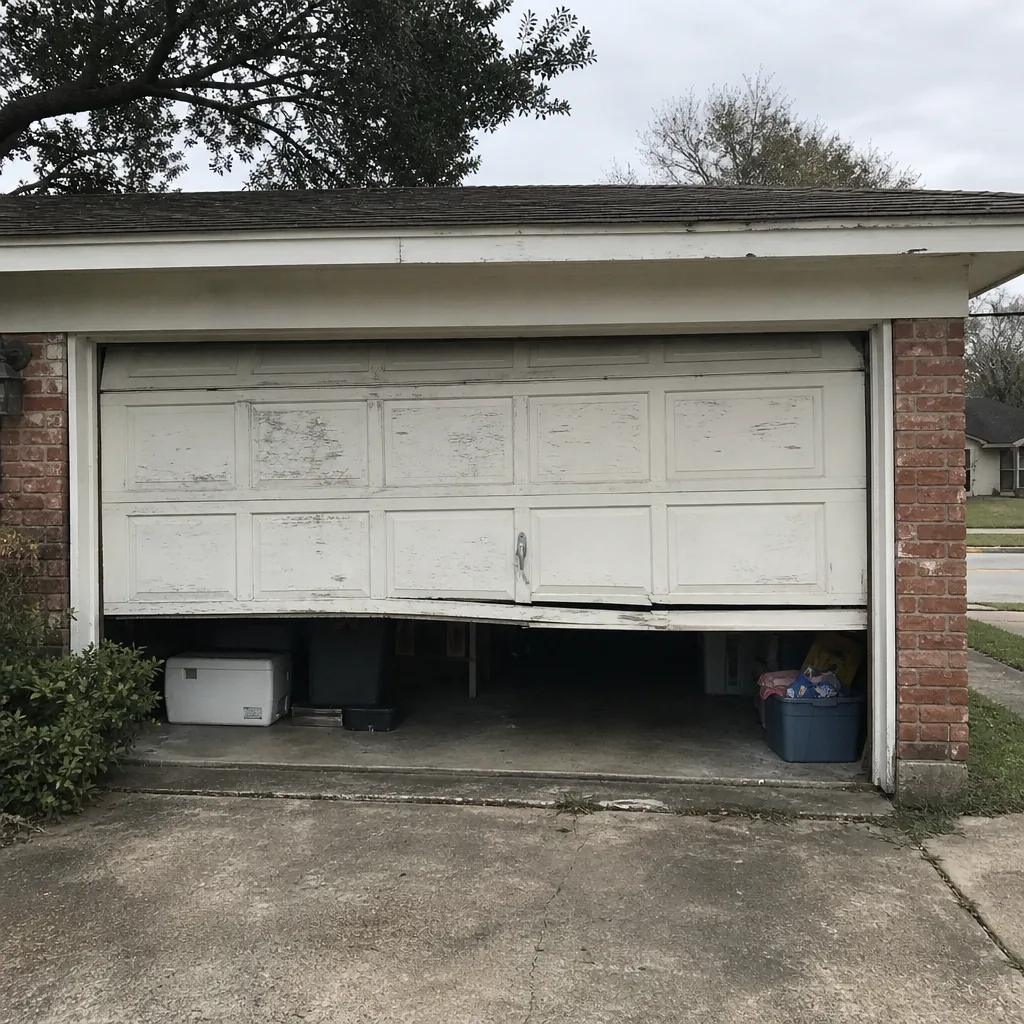 Before
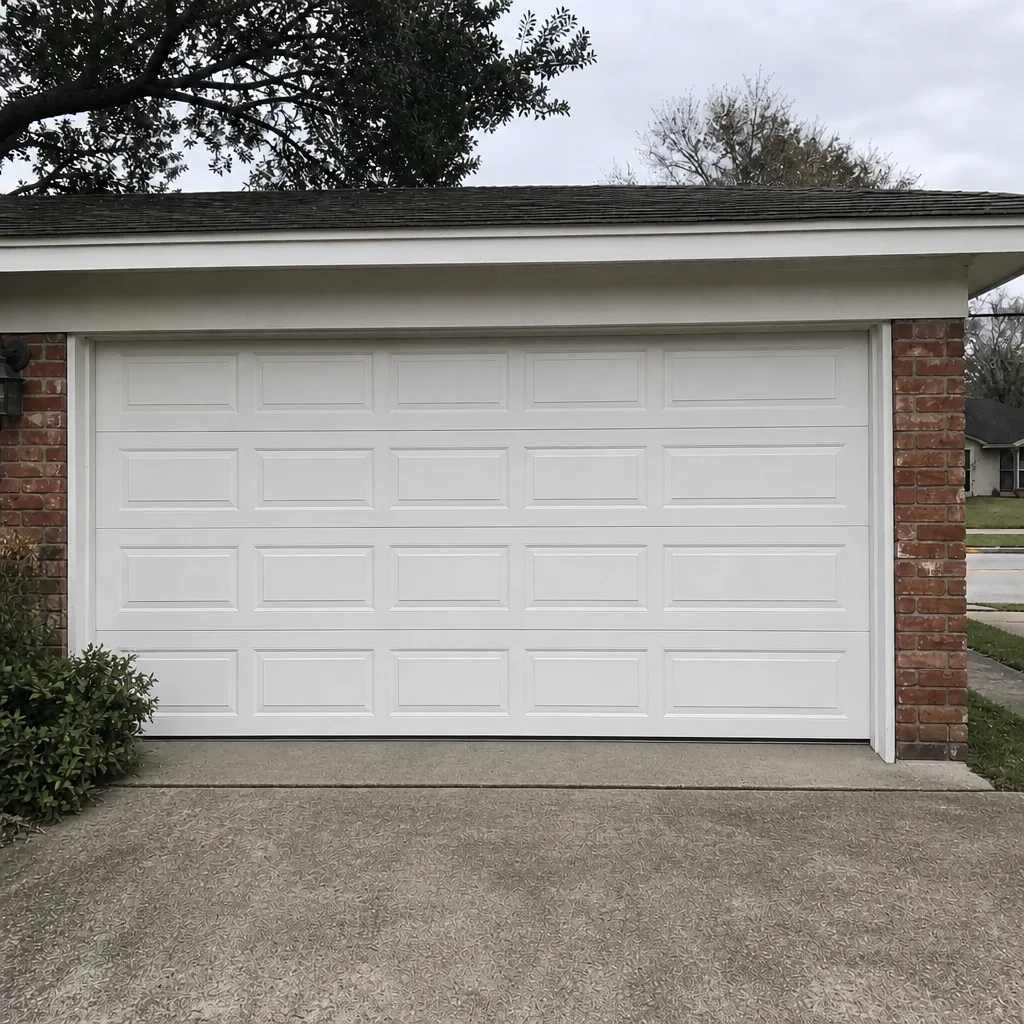 After
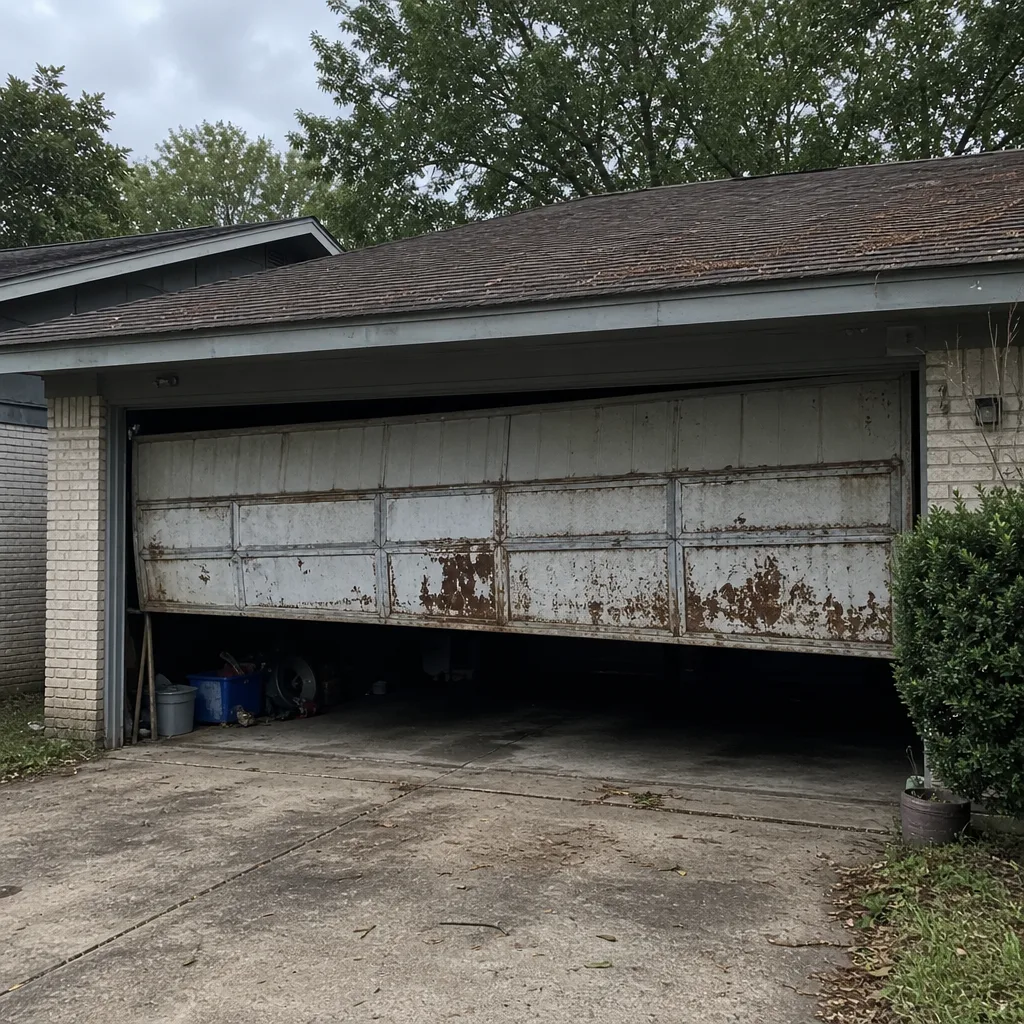 Before
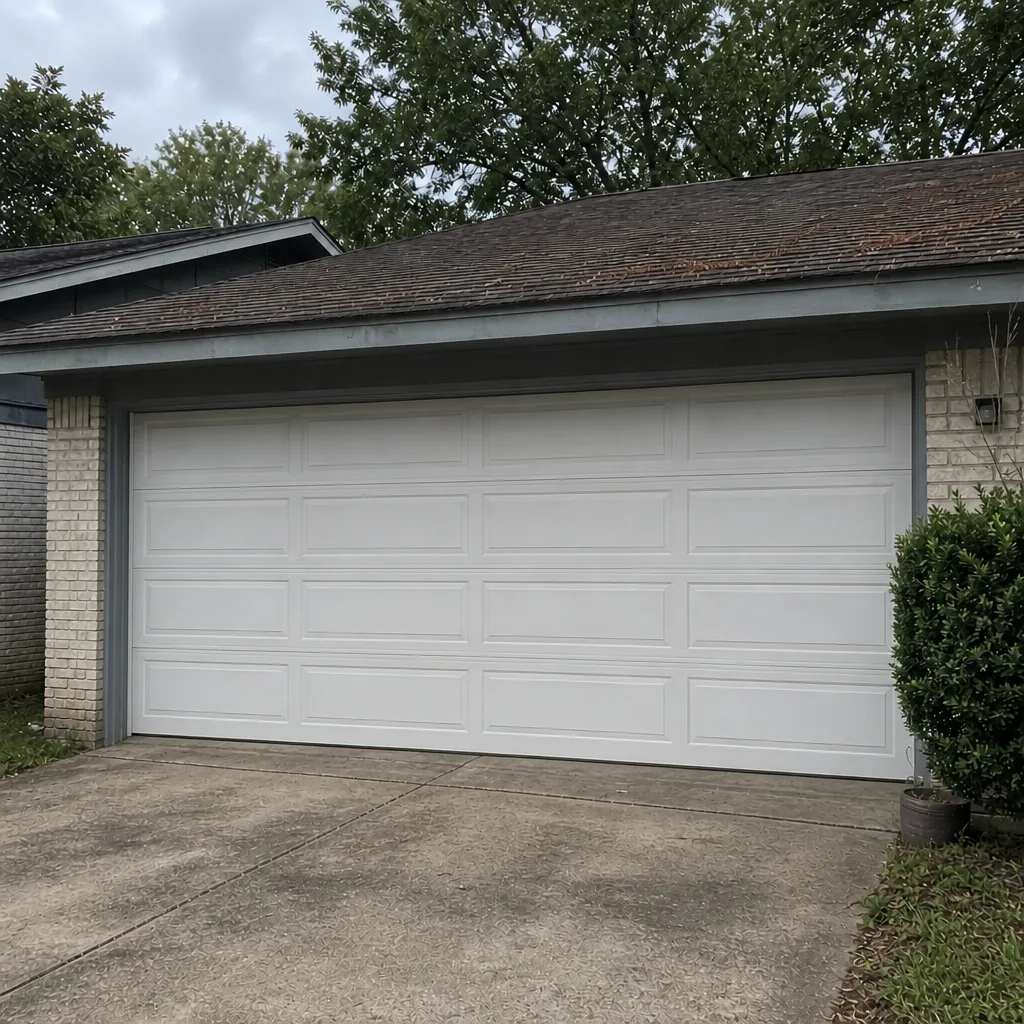 After
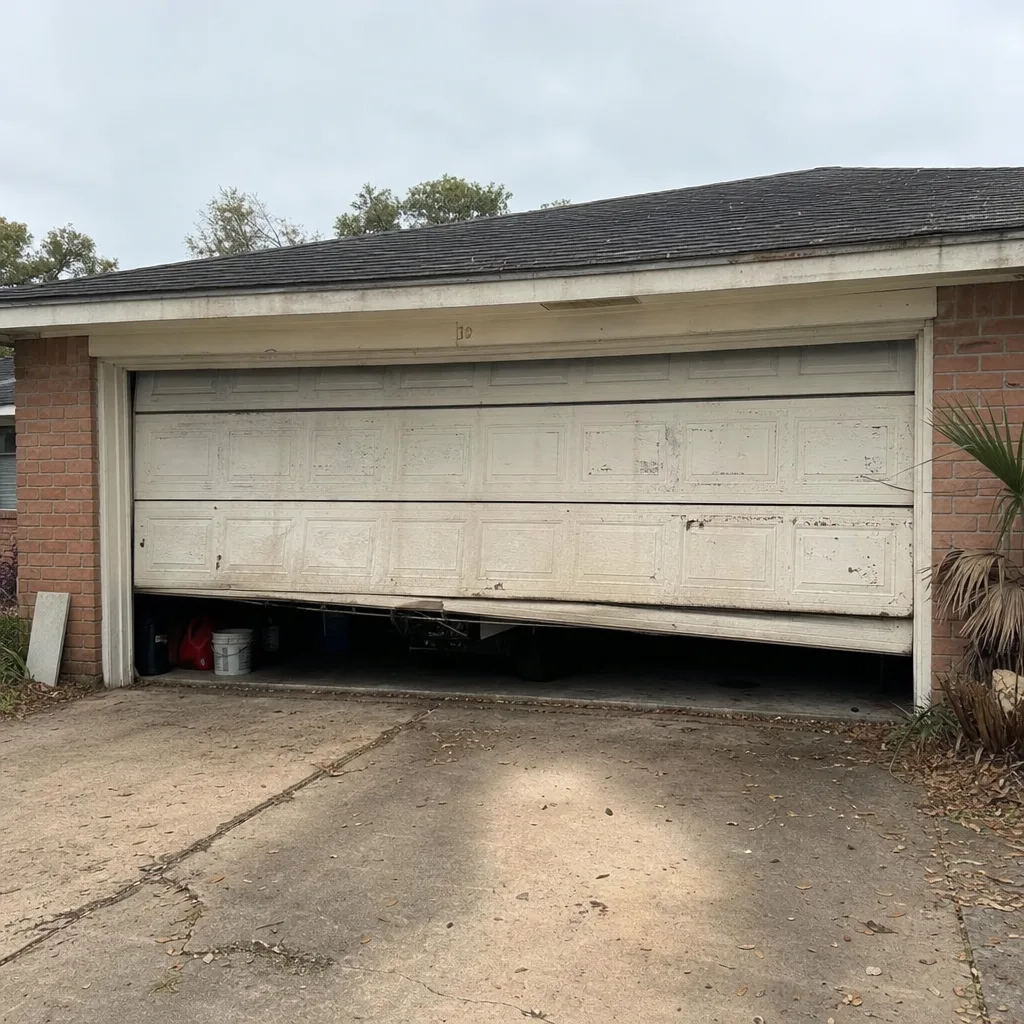 Before
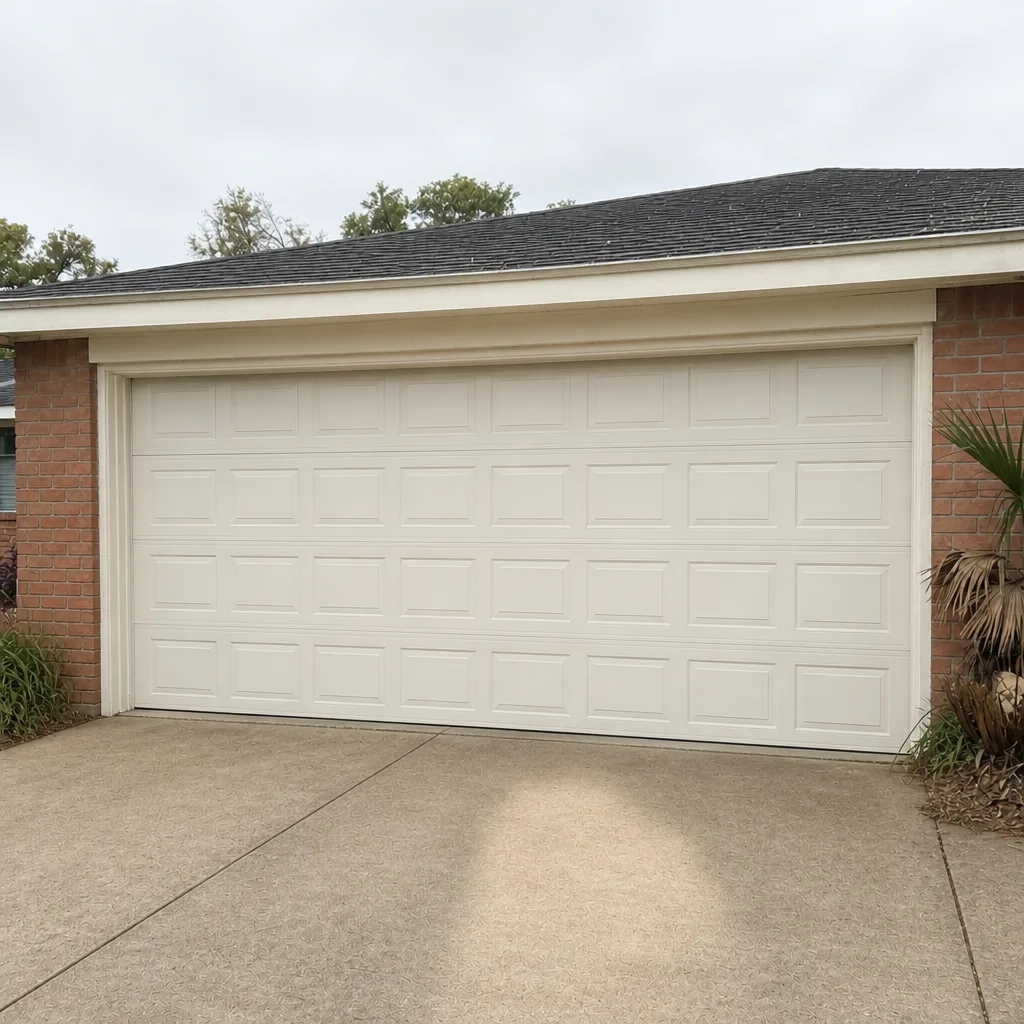 After
When to Call a Professional
Call us when the permit question is the reason you’re stuck. Call us when the door won’t open, when the spring has snapped and the door is sagging, when the opener is running but the door isn’t moving, or when the door is off its track and you can’t get a vehicle out. Call us when you’re weighing a repair against a full replacement and the paperwork question is muddying the decision. Call us when a door in a Meyerland home needs a wind-load label photographed and reinstalled, or when a seller needs to verify what an earlier installer actually did. Call us when the door has been hit by a vehicle and the frame has moved. Call us when a spring has been replaced but the door still runs rough and you don’t know why.
Garage Door Repair Meyerland offers free estimates in Meyerland. Call (866) 937-7492. We answer 24/7. Fast dispatch from 7am to 7pm, Sunday through Friday.
Our technicians have up to 14 years of experience, and we focus on garage doors exclusively. That matters on this page more than any other, because the code and permit questions are exactly the ones a generalist contractor tends to wave off.
Frequently Asked Questions
A like-for-like replacement of a door in the same opening, same material type, and same size generally doesn’t need a permit, while a project that changes the opening, the framing, or the floodplain status generally does. The answer for your specific address depends on the door’s history and whether the property has filed a flood claim, so call the City of Houston building department with your project description. If you’re not sure which category you’re in, we’re happy to walk through what the work involves and what documentation you’ll want to keep. Call (866) 937-7492 for an exact quote and a conversation about your door: estimates are free.
A wind-load rating is a manufacturer’s documented statement of how much design pressure a specific door configuration can withstand, and yes, garage doors in Harris County are subject to that requirement. Ratings change with width, height, and reinforcement, so the rating for your door may differ from a neighbor’s door of a different size. Ask the installer to show you the rated pressure documentation for the exact model and configuration being quoted, and keep that document. If the installer can’t produce the paperwork without a scramble, get a second quote. Call (866) 937-7492 for help identifying what’s already installed on your door, and estimates are free.
The gap shows up as missing documentation, which can affect buyer confidence, lender questions, or a claim down the road. The remedy is usually a retroactive permit and an inspection, and it’s cheaper to deal with before the house goes on the market than after. Disclose honestly on your seller’s disclosure if you know a replacement happened without a permit that was required. Call (866) 937-7492 if you need a technician to look at the installed door and tell you what’s actually there, and the estimate is free.
A like-for-like opener swap in an already-wired garage is generally a mechanical replacement, while running new electrical wiring to a new location may require an electrical permit. If the new opener goes into the same mounting and same outlet, the permit question is usually about the door, not the opener. Call the City of Houston if your project involves new wiring. Call (866) 937-7492 for an exact quote on the opener replacement itself: estimates are free.
You verify it by matching the door’s manufacturer-documented rating to the design pressure for your opening, and by confirming the reinforcement components in the installation match what the rating was tested with. The label on the door and the manufacturer’s certificate are the primary evidence. Keep a photo of the label before the door gets painted and keep the certificate in your house file. If a technician ever questions whether the installed door meets the standard, that’s an inspection question, and we handle those. Call (866) 937-7492 for an exact quote: estimates are free.
Yes, if the call comes in during dispatch hours, we can often get a technician out the same day. We answer 24/7, and fast dispatch runs 7am-7pm, Sunday through Friday; a call outside those hours is booked into the next opening. If your door is off track or a spring has failed, don’t try to force it back into position yourself, because the spring is under extreme tension and the door can come down on you. Call (866) 937-7492 so we can get a technician moving.
The Bottom Line
The permit question in Meyerland comes down to three things: whether the project changes the opening or the structure, whether the door has a documented wind-load rating that matches the design pressure for your address, and whether a flood claim history on your property puts the replacement under floodplain review. Like-for-like component replacement is generally routine maintenance with no permit required; anything structural, anything post-flood, and anything that changes door type usually triggers a review. The documentation you keep afterward (permit, inspection slip, wind-load certificate, written estimate and invoice) is what protects you at resale and at claim time. When the answer isn’t clear, call the City of Houston building department with your address and your project, and call us for the actual door work. We’re a single-trade specialist, we carry parts so repairs happen at the visit rather than days later, and we’d rather spend five minutes sorting the paperwork than five years explaining a shortcut.
Call (866) 937-7492 for a free estimate on your garage door in Meyerland. We answer 24/7. Fast dispatch from 7am to 7pm, Sunday through Friday. Our written estimate sets the price, and the price is quoted and agreed before any work starts. If you’re looking at a replacement instead of a repair, we’ll come out to measure and write the price, and we’ll help you figure out what the paperwork on your driveway actually needs. The garage door installation conversation is a scheduled one: a free measure, a written price, and a clear scope.
Written by the team at Garage Door Repair Meyerland.