
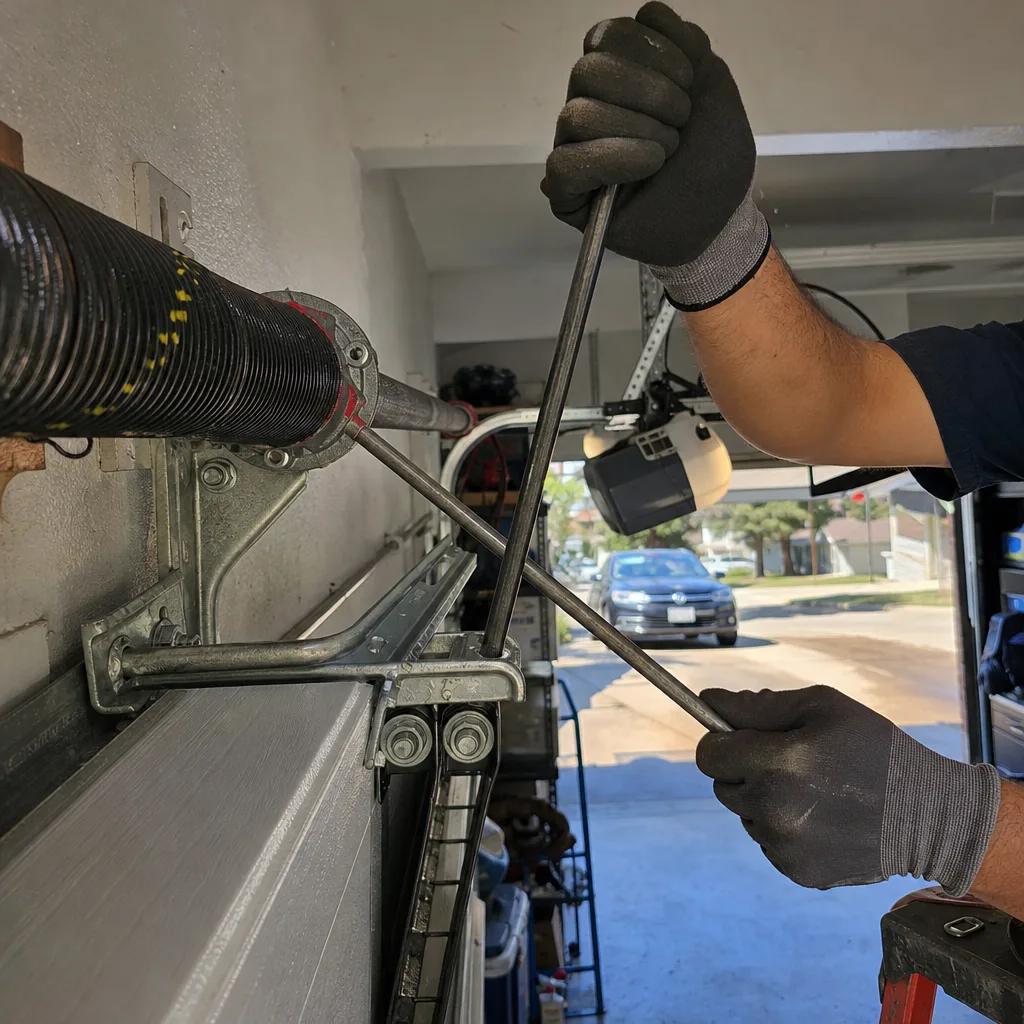
Last updated November 21, 2026
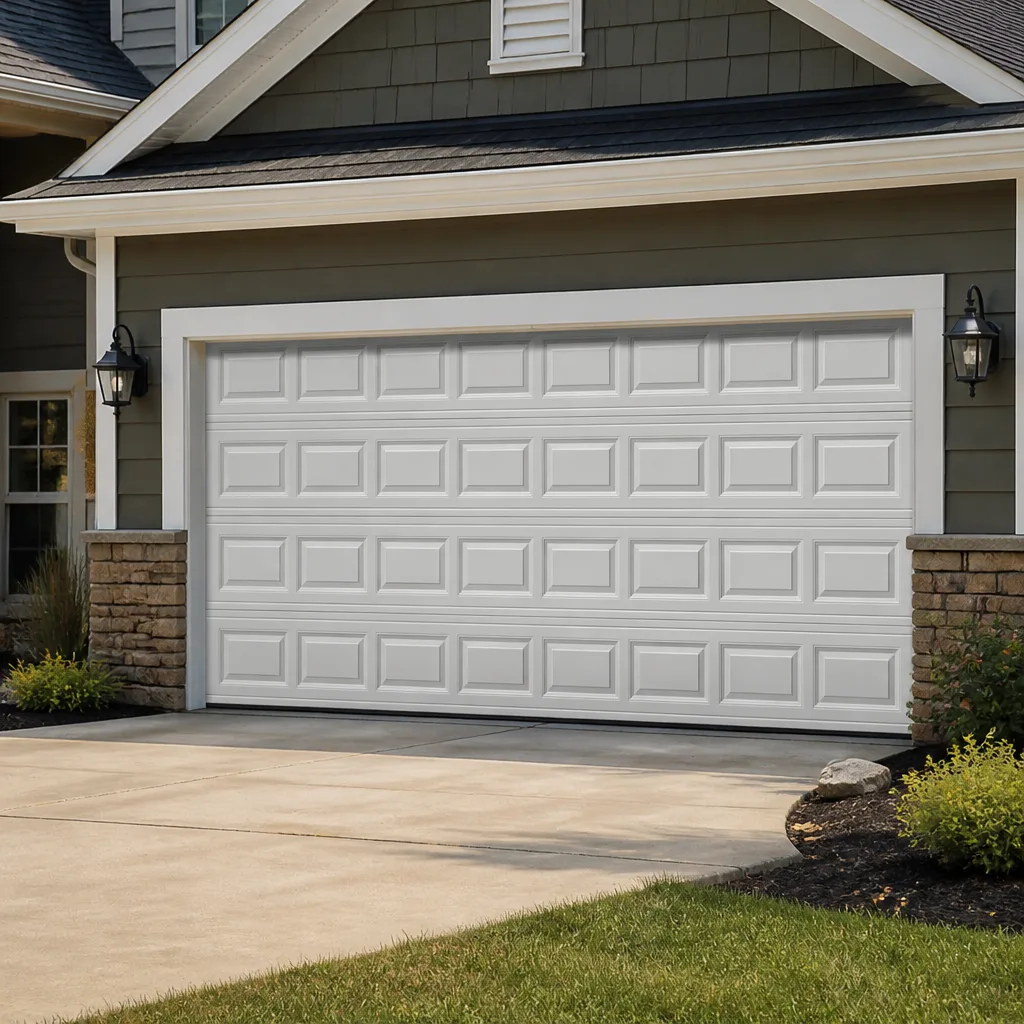 Raised-panel steel
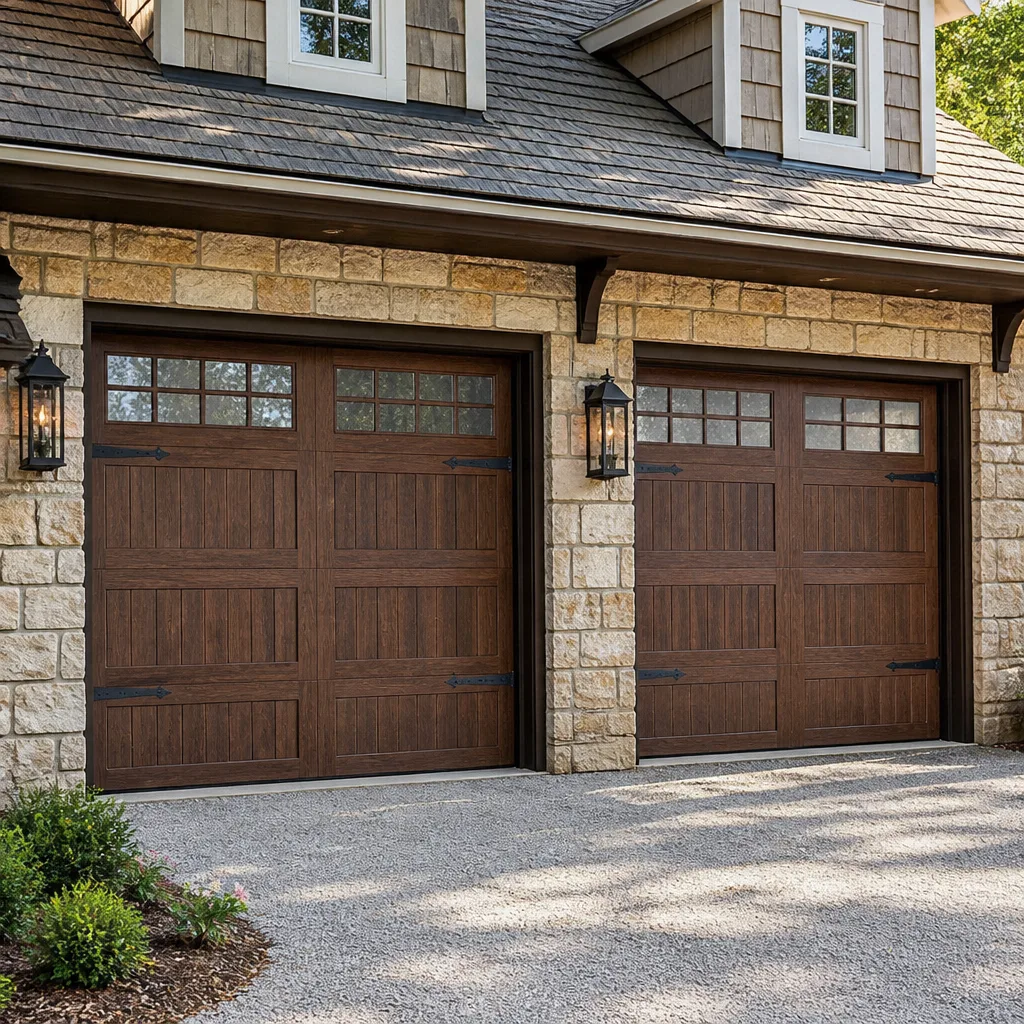 Carriage house
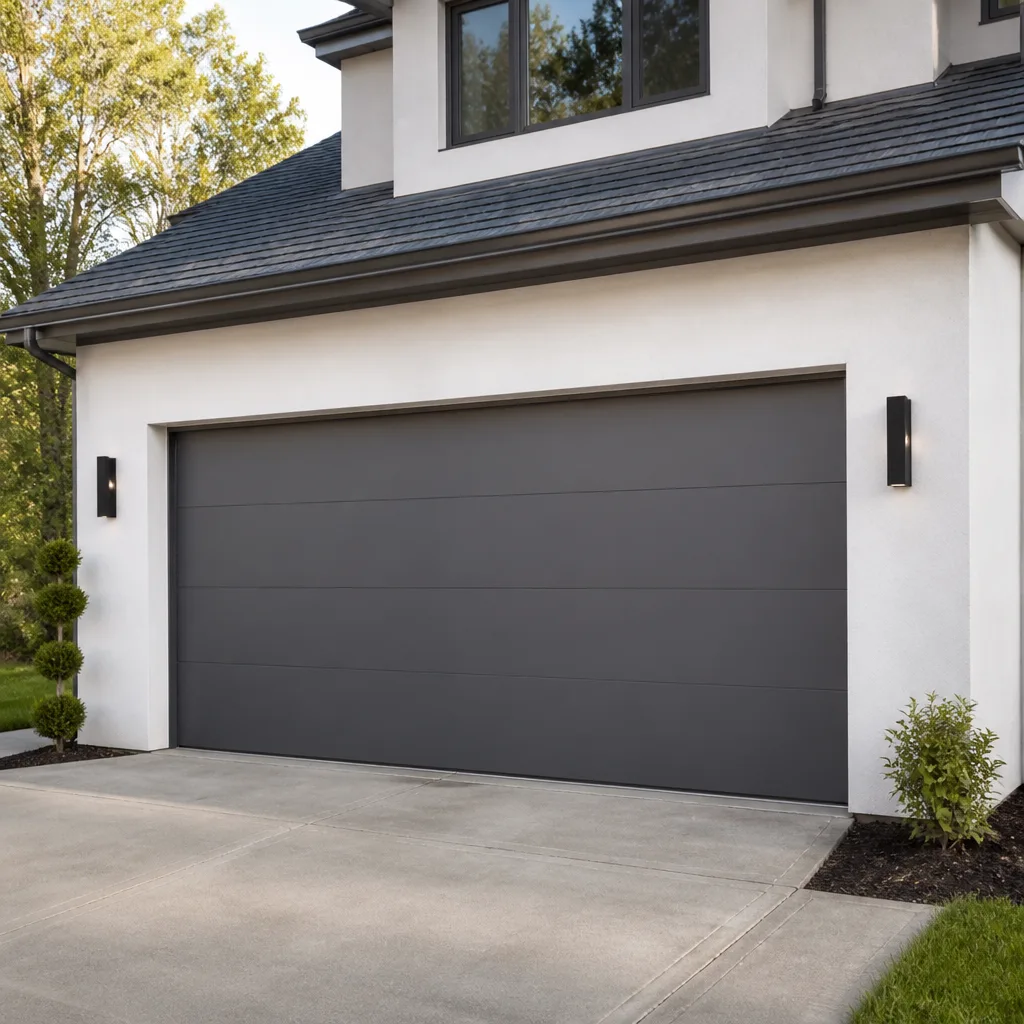 Modern flush
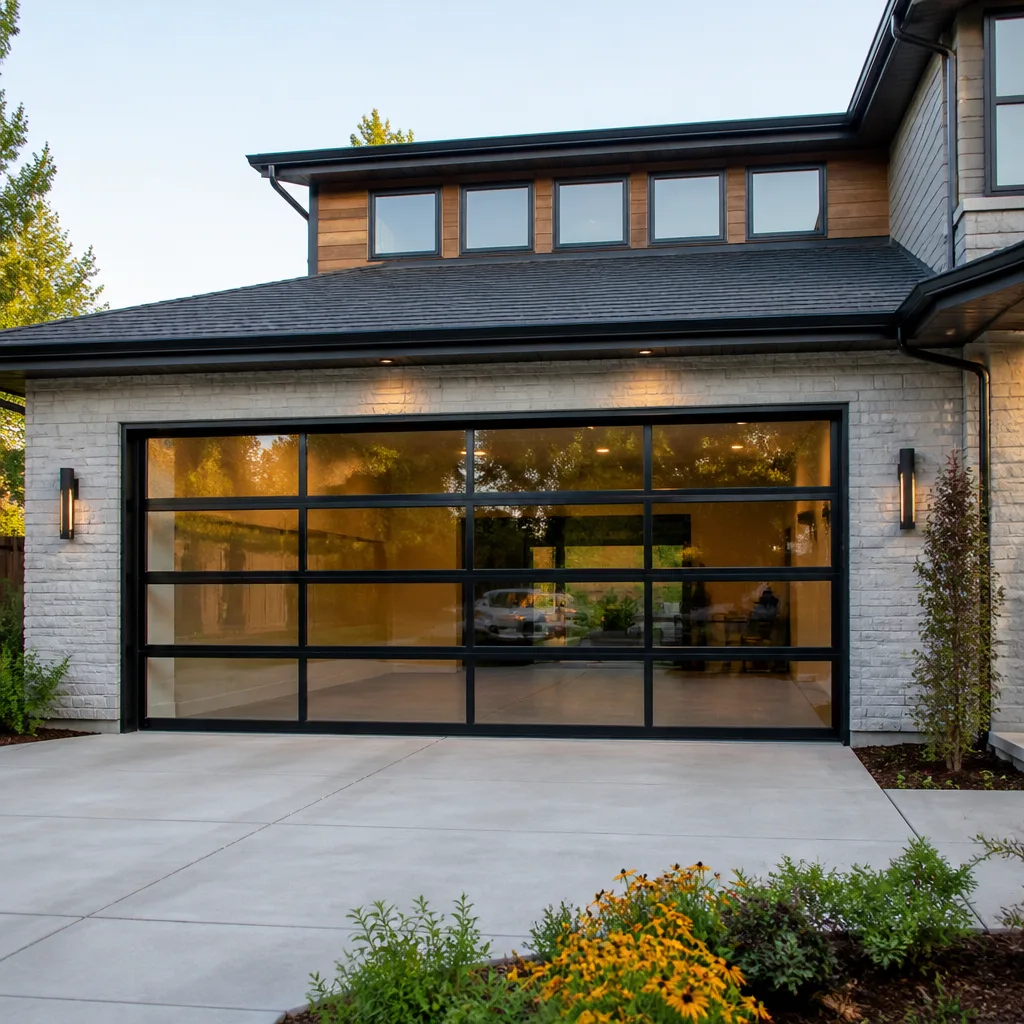 Full-view glass
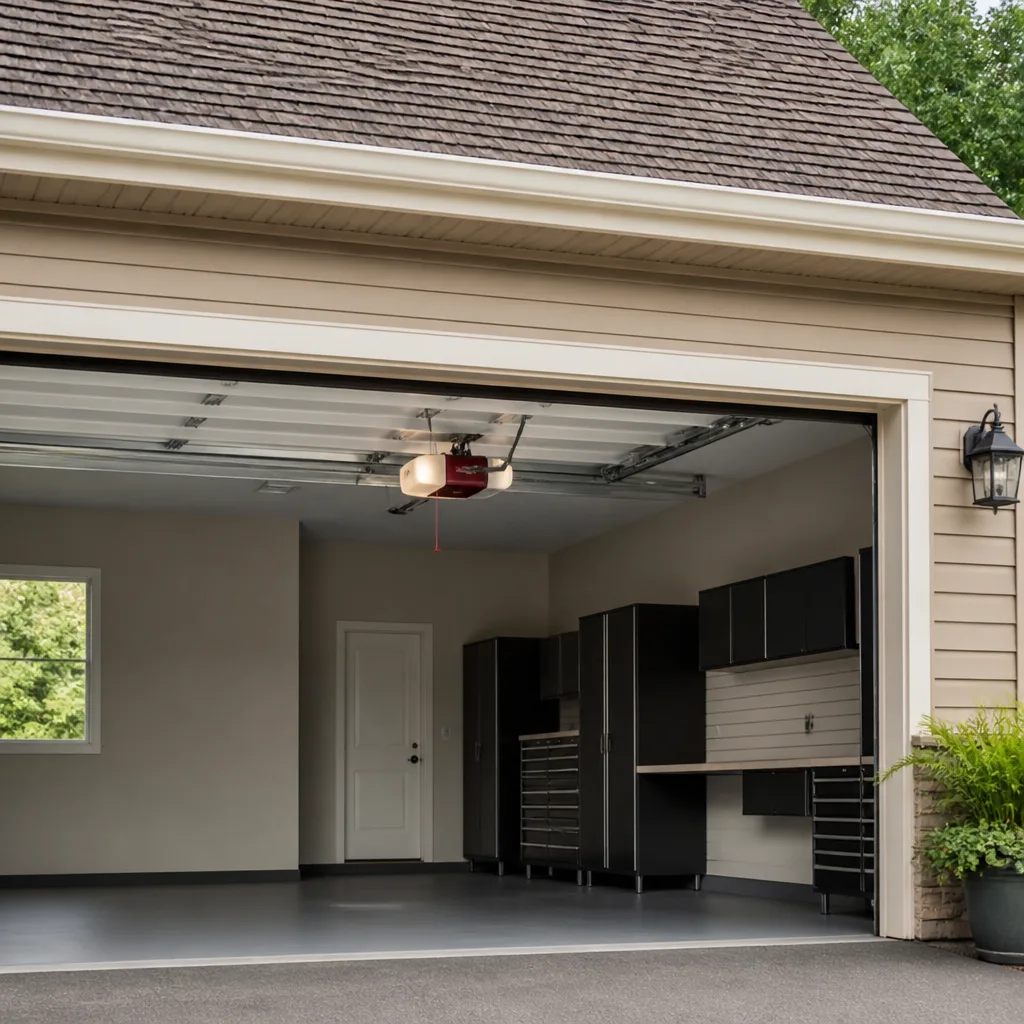 LiftMaster openers
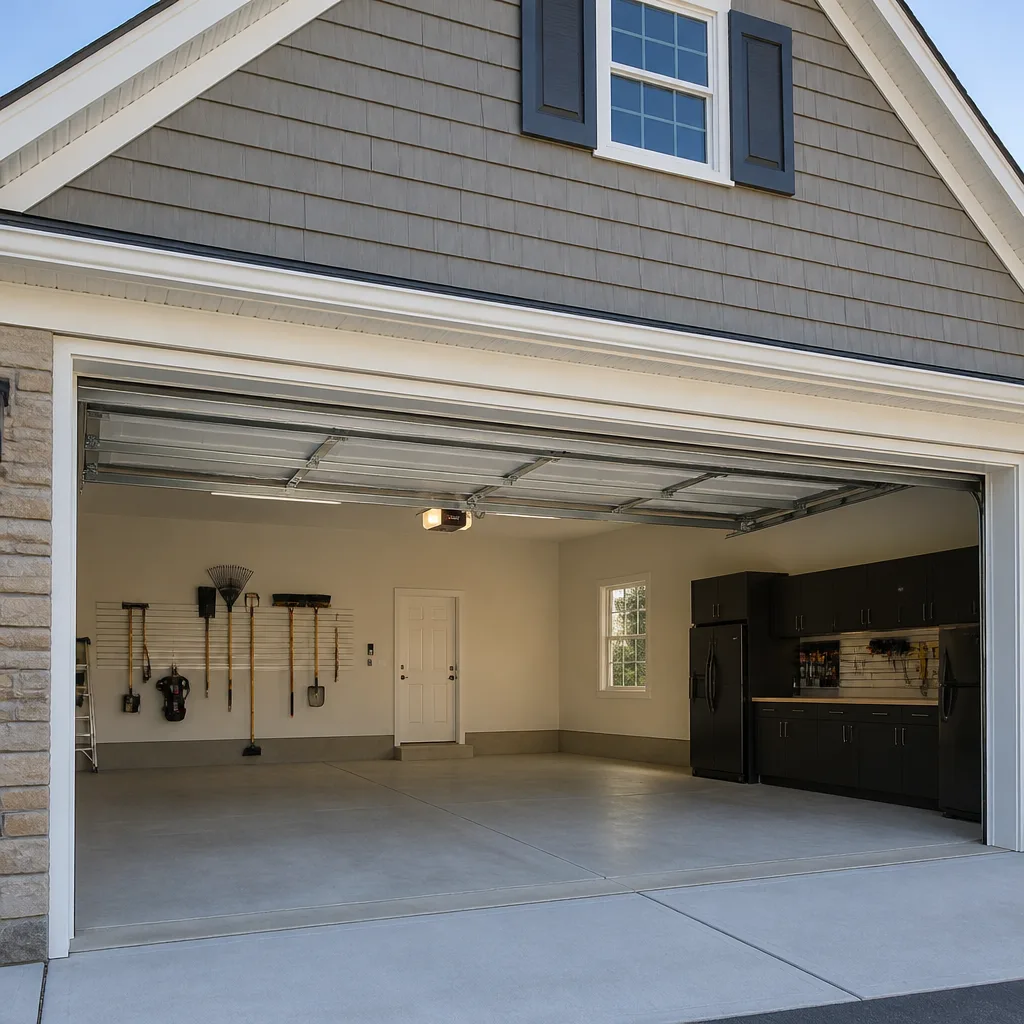 Chamberlain openers
Full 25-point door and opener safety check with every visit - springs, cables, rollers, tracks, and your LiftMaster or Chamberlain opener included
You get a price before we start. It does not change when the pro arrives.
Get your free estimateGarage Door Cost Breakdown: The Meyerland Homeowner’s Reference for 2026
The national averages you’ll find on most cost guides were not calculated after a named tropical storm rolled through a Houston neighborhood. That matters more here than it does almost anywhere. In Meyerland, the same spring replacement can carry a very different price tag depending on whether the city is in a calm stretch or a post-storm scramble for parts and labor, when demand spikes and half the neighborhood is calling at once. We wrote this reference to give Meyerland homeowners a clear, number-driven look at what each repair and replacement actually costs in 2026, where quotes get padded, and how to tell a fair estimate from a red-flag one.
Quick Answer
In Meyerland in 2026, most garage door repairs fall between $150 and $450 for common fixes like a single spring, a set of rollers, or a cable replacement, while opener repairs typically run $120 to $350 and a full door installation ranges from about $1,200 for a basic steel door to $4,000 or more for a mid-grade wind-rated door installed correctly. The exact number depends on your door’s size, the parts your brand needs, and whether the job lands in a calm market or a post-storm surge. Get the price in writing before any work starts, and treat any quote that changes after the fact as a conversation, not an invoice.
Styles & brands we work with
- Raised-panel steel
- Carriage house
- Modern flush
- Full-view glass
- LiftMaster openers
- Chamberlain openers
Table of Contents
- What each garage door component costs in Meyerland
- The Meyerland cost multipliers nobody warns you about
- What “parts and labor” actually means, broken down by time
- When insurance covers a garage door and when it doesn’t
- Five-year cost of ownership: cheap door vs. mid-grade door
- How a typical Meyerland garage door job actually goes
- Reading a quote: honest mid vs. red-flag high
- Common mistakes to avoid
- When to call a professional
What each garage door component costs in Meyerland
A garage door looks like one unit until something fails, and then it becomes a collection of parts with very different price points. Knowing the range for each part is the single best defense against an inflated quote, because it lets you see immediately whether the number on the paper reflects the work or someone else’s margin. Here’s how component pricing shakes out in Meyerland for 2026. All figures are typical estimates; the written estimate you receive sets the final price.
- Torsion spring (one spring): $180 to $340. A matched pair is usually replaced together, so a pair runs about twice that. Spring work is safety-critical, and a generalist who avoids it may quote a number that sends the job to a subcontractor.
- Extension spring (one spring): $140 to $260. Often found on older doors, and slightly cheaper per spring than torsion but replaced in pairs as well.
- Cable replacement: $120 to $250. Cables work with the springs under high tension, so we always recommend replacing a damaged cable before it frays completely.
- Rollers (set): $90 to $180. Nylon rollers run quieter than steel and last longer. If your door rattles and shudders, this is often the culprit.
- Bottom panel or top section: $200 to $500 depending on door style. Panels for Clopay, Amarr, and Wayne Dalton doors vary a lot by profile and color.
- Opener repair: $120 to $350. LiftMaster, Chamberlain, Genie, and Craftsman units are the most common in Meyerland homes, and each has its own diagnostic quirks.
- Full opener replacement: $350 to $650 installed, including a smart-home-ready unit.
- Hinges and hardware: $60 to $150 for a full tune-up that swaps worn hinges and tightens the system.
If your door needs several of these at once, a tune-up package often lands between $250 and $400, and it’s worth asking what’s included line by line rather than accepting a bundled figure. For a full picture of how we approach the work, see garage door repair.
The Meyerland cost multipliers nobody warns you about
Most national garage door cost guides assume a standard door in a standard opening filled by a standard crew on a standard week. Meyerland throws a wrench into every one of those assumptions. Knowing the local factors lets you ask the right questions and recognize when a quote is responding to a real condition on your property versus when it’s padding.
Post-storm surge pricing
When a tropical system moves through the Houston area, demand for garage door parts and labor spikes fast. Springs, cables, and panels that normally arrive in a day or two sit on backorder, and crews are booked out. In the scramble that follows, the same spring replacement that runs $180 to $340 in a calm month can see quotes at the higher end or beyond, and some operators will push pricing up 40 to 60 percent simply because they can. The best protection is time: if your door can wait a week or two, schedule the work after the initial wave passes. If it can’t, ask for the quote in writing and compare it to the ranges in this guide.
Non-standard opening dimensions
Many mid-century Meyerland homes were built with garage rough openings that don’t match today’s standard sizes. When a door has to be custom-fit to an opening that’s 8 feet wide instead of 9, or 7 feet tall instead of 8, parts costs go up and labor goes up with them. A contractor who doesn’t measure carefully may install a stock door that binds, squeaks, or fails prematurely, and the fix ends up costing more than the correct installation would have.
Wind-load and flood-rated product premiums
Meyerland sits in a flood corridor, and wind-rated garage doors carry a real premium over builder-grade stock. A basic unrated steel door might run $1,200 installed; a mid-grade wind-rated door with the proper bracing and hardware typically runs $2,000 to $4,000. That gap is real and it’s worth understanding before you compare a cheap quote to a comprehensive one. The lower-rated door is not the same product, and matching them on price is comparing two different things.
What “parts and labor” actually means, broken down by time
When a quote says “$450 parts and labor,” most homeowners have no idea what portion is what. That opacity is where padding hides. Here’s how the split typically works on a garage door job, using time as the lens.
A torsion spring pair replacement, for example, involves roughly 30 to 45 minutes of actual work for a technician who has done it hundreds of times, plus the cost of the springs themselves and the winding bars and safety checks that go with the job. If a quote comes in at $800 for the same service, something is inflated. Either the parts are marked up two or three times what they should be, or the labor estimate is based on a novice, or the quote includes contingency for tasks that aren’t actually happening.
Here’s a rough breakdown by job type:
- Spring replacement: 30 – 60 minutes of labor plus parts. Expect $180 – $340 per spring, $360 – $680 for a pair.
- Cable replacement: 30 – 45 minutes. $120 – $250 all-in.
- Roller and hinge tune-up: 45 – 90 minutes depending on the number of rollers and condition of the tracks. $150 – $400.
- Opener repair or replacement: 45 minutes to 2 hours. $120 – $350 for a repair, $350 – $650 for a full replacement.
- Panel replacement: 1 – 3 hours depending on section. $200 – $500 per panel.
- Full door installation: 4 – 8 hours for a two-person crew. $1,200 – $4,000+ depending on door type and wind rating.
The single most useful question you can ask is: “Can you break that down for me?” A fair quote itemizes parts and labor. A padded quote resists the question. If the technician won’t or can’t explain the split, that’s the answer. For same-day repair of a real mechanical failure, our garage door opener repair team can be on-site quickly, and we always quote before we start.
When insurance covers a garage door and when it doesn’t
This is one of the trickiest questions in Meyerland. In a flood corridor, storm damage is a real annual concern, and homeowners want to know whether their policy will cover the door before they commit to a repair. The honest answer: it depends on what happened and how you document it.
The general rule is that sudden, accidental damage from a named peril (a storm, a falling tree limb, a vehicle impact) is more likely to be covered than wear-and-tear, aging springs, or a door that failed because it was years past its service life. Flood damage is usually a separate rider, not included in a standard homeowner policy. If you’re not sure whether your situation qualifies, call your insurer before scheduling the work, and ask specifically whether the loss is covered under your dwelling coverage.
At claim time, these steps matter:
- Photograph the damage before you touch anything. Wide shots showing the whole door and the surrounding area, plus close-ups of the failed component.
- Keep any damaged parts. Adjusters may want to see the broken spring, cracked panel, or frayed cable.
- Get two written estimates. Most insurers want to see more than one number on paper.
- Document the date and cause. A short written note about what happened and when it happened is worth its weight in the adjuster’s file.
- Ask the contractor to note pre-existing condition. A good technician will tell you plainly, in writing, what was failing before the event and what was caused by it.
We can work with your insurer on the documentation side. Just be clear-eyed about what’s an out-of-pocket repair versus what’s a genuine claim. Most spring and cable repairs are out-of-pocket, and most structural damage from a covered event isn’t.
Five-year cost of ownership: cheap door vs. mid-grade door
Here’s the comparison that most cost guides skip, because the raw install price hides the real math. A basic steel door installed fast looks cheaper today. A mid-grade wind-rated door installed correctly costs more upfront. In a flood-corridor neighborhood like Meyerland, the five-year math often flips that conclusion.
Picture two doors side by side over five years. The basic steel door: $1,200 installed, but the tracks and hardware are thin, the panels dent in a wind event, the bottom seal wears out faster in Houston’s humidity, and the opener has to work harder because the door is unbalanced. Expect a cable or roller repair around year two or three, a bottom seal replacement by year four, and a moderate chance of storm damage in a neighborhood that’s seen real weather events. That’s another $300 to $600 in repair spend over the period.
The mid-grade wind-rated door: $2,500 to $3,500 installed, with bracing that handles a named storm, better seals that hold up to Houston’s heat and damp, and a sturdier panel that takes a minor impact without creasing. That door typically sees one tune-up in five years and returns higher resale value when you sell, especially in a neighborhood where buyers know what wind mitigation is worth.
The break-even often lands around year three to four, and it moves earlier whenever the storm season is active. If you’re staying in the home, the upgrade math is usually worth running. For the full picture on how Meyerland installations work, see garage door installation.
How a typical Meyerland garage door job actually goes
We get asked a lot what actually happens when a technician comes out. Here’s the general sequence, so you know what to expect.
- Phone call. We answer 24/7. A call outside dispatch hours is booked into the next opening, Sunday through Friday, 7am to 7pm.
- Description over the phone. If you can tell us what the door is doing (won’t open, won’t close, rattles, bangs, one side drops), we can often pre-load the truck with the most likely parts before we arrive.
- On-site diagnosis. The technician tests the door balance, checks the springs and cables, and inspects the opener. In our experience, this is where small problems turn up that the homeowner didn’t notice, and we point them out without pressure.
- Written estimate. We hand you the written quote before any work starts. Nothing is done until you approve the price.
- Repair. Most common repairs happen in a single visit, because we carry parts. Springs, rollers, cables, and opener components are on the truck.
- Test and walk-through. We cycle the door several times, check the safety sensors, and show you what we replaced.
If the opener itself is on its way out and the brand is LiftMaster, Chamberlain, or Genie, the fix is usually straightforward. Older Craftsman and Raynor units can be trickier because some parts have to be sourced, and that’s exactly why we focus on these brands: we know what’s likely to fail and what we’ll need to fix it.
Reading a quote: honest mid vs. red-flag high
Somewhere between the low-end outlier and the red-flag high, there’s an honest mid price that reflects real work. Here’s how to tell them apart.
- Low-end outlier: The number is suspiciously below the ranges in this guide. The technician may be quoting labor only, planning to push the job to a subcontractor, or planning to upsell once on-site. Ask what the quote includes and whether parts are included.
- Honest mid: The price falls within the ranges above, itemizes parts and labor, and explains in one or two sentences what the technician will do. This is the quote that pays for the work and no more.
- Red-flag high: The number is 30 to 60 percent above the range and the itemization is vague or missing. This is where you ask for the breakdown in writing and see if it holds up under scrutiny. An honest contractor will give you the breakdown without defensiveness.
One more note: on this trade, spring and cable work carries real risk. A trained technician has the tools, the winding bars, and the training to work under tension safely. If a quote for springs is dramatically below the range, there’s a decent chance someone is planning to attempt the work without the right equipment.
Common Mistakes to Avoid
- Accepting a verbal quote. Without a written number, there’s no anchor for the final invoice. Always ask for it in writing before work starts, and if you don’t get one, don’t proceed.
- Comparing a cheap quote to a comprehensive one on price alone. A $1,200 basic door and a $2,500 wind-rated door are not the same product. Comparing them on price is comparing two different things; comparing them on five-year cost and storm survivability makes more sense.
- Skipping the diagnostic and going straight to replacement. A lot of doors that “need replacing” only need a spring, a cable, or a set of rollers. Get the diagnosis before you commit to a full install.
- Forgetting to check the rough opening. Mid-century Meyerland homes often have non-standard rough openings. A technician who measures first and measures twice is the one to keep.
- Ignoring the opener’s age. If your opener is 15 years old and every other part in the door has been replaced, you may be treating symptoms rather than the real cause. The opener drives the door; when it fails, everything else feels the strain.
- Not documenting damage before a claim. Photos before any cleanup, kept parts, two written estimates: these three steps separate a smooth claim from a contested one.
- Assuming a generalist is the same as a specialist. Garage doors are high-tension, heavy, and unforgiving. A generalist who dabbles may do fine on the easy jobs and mishandle the ones that matter.
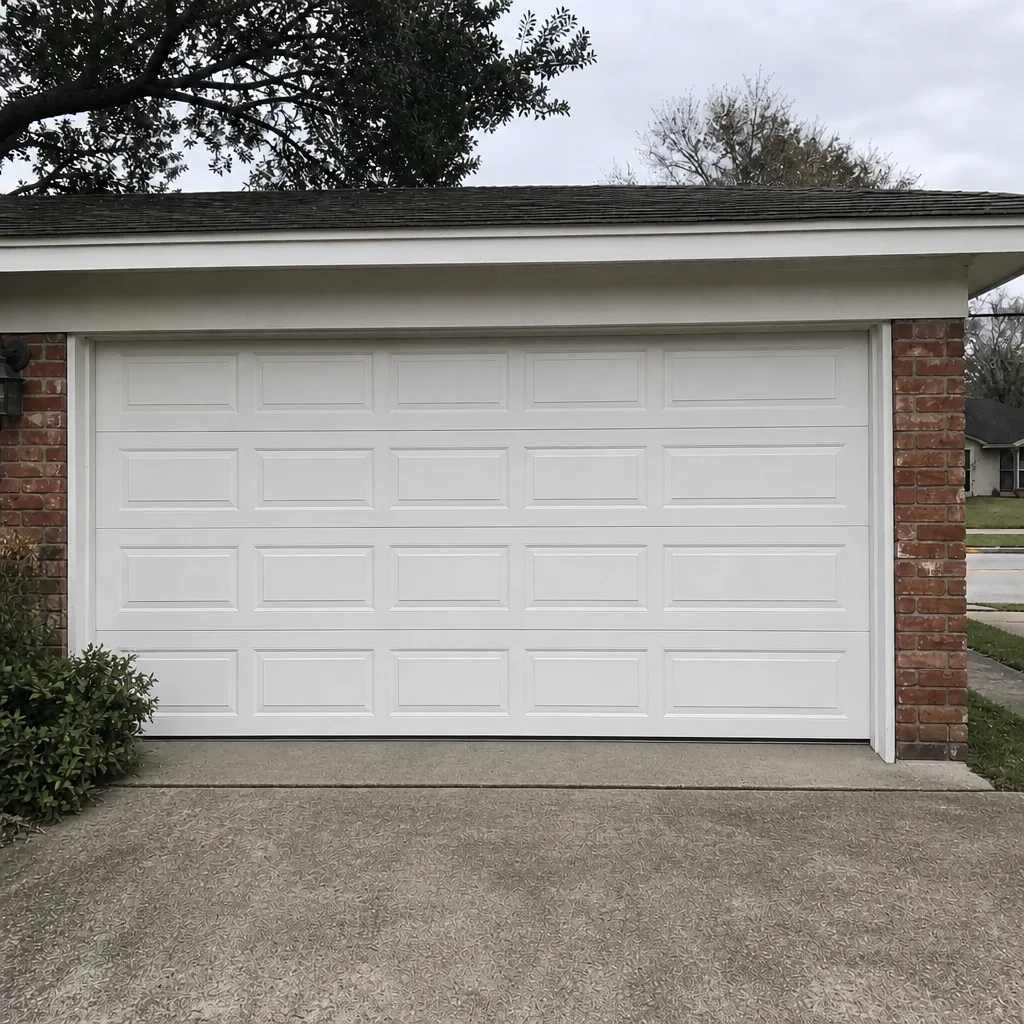
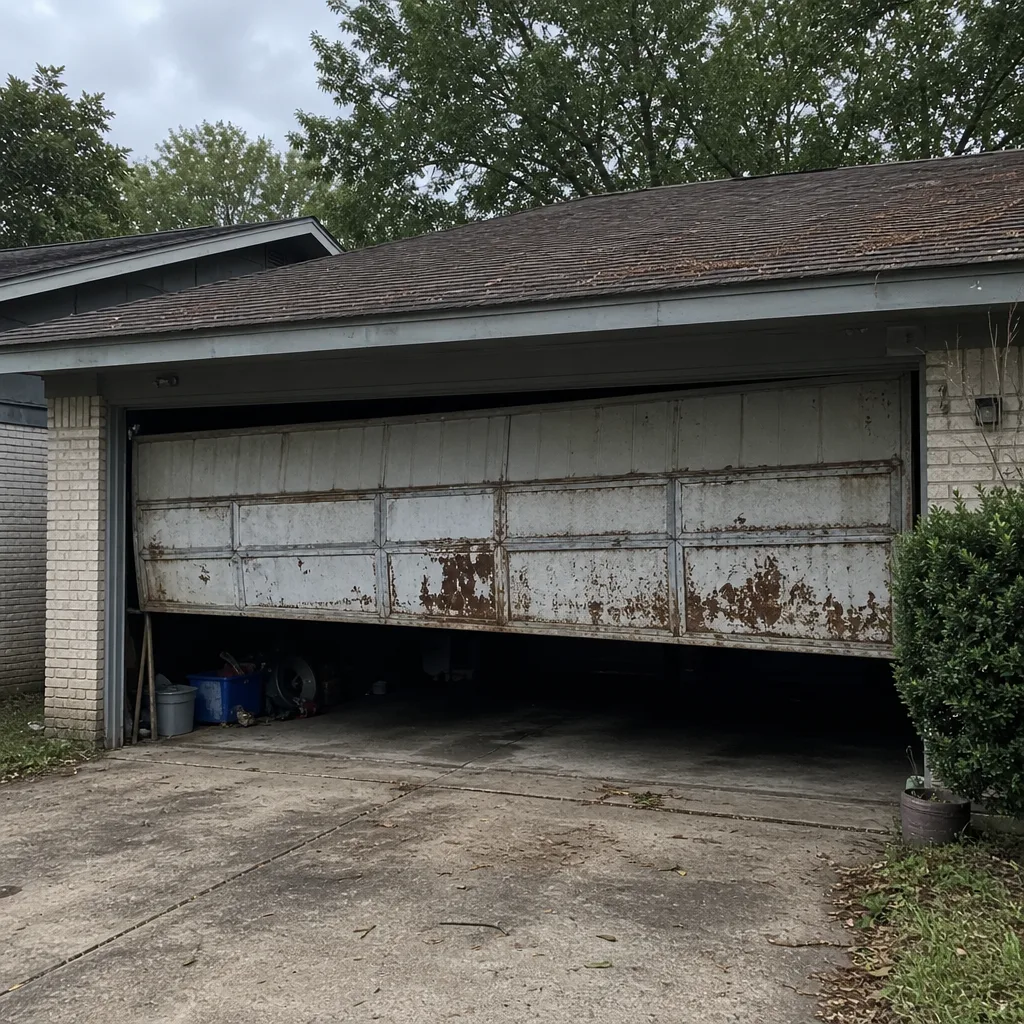
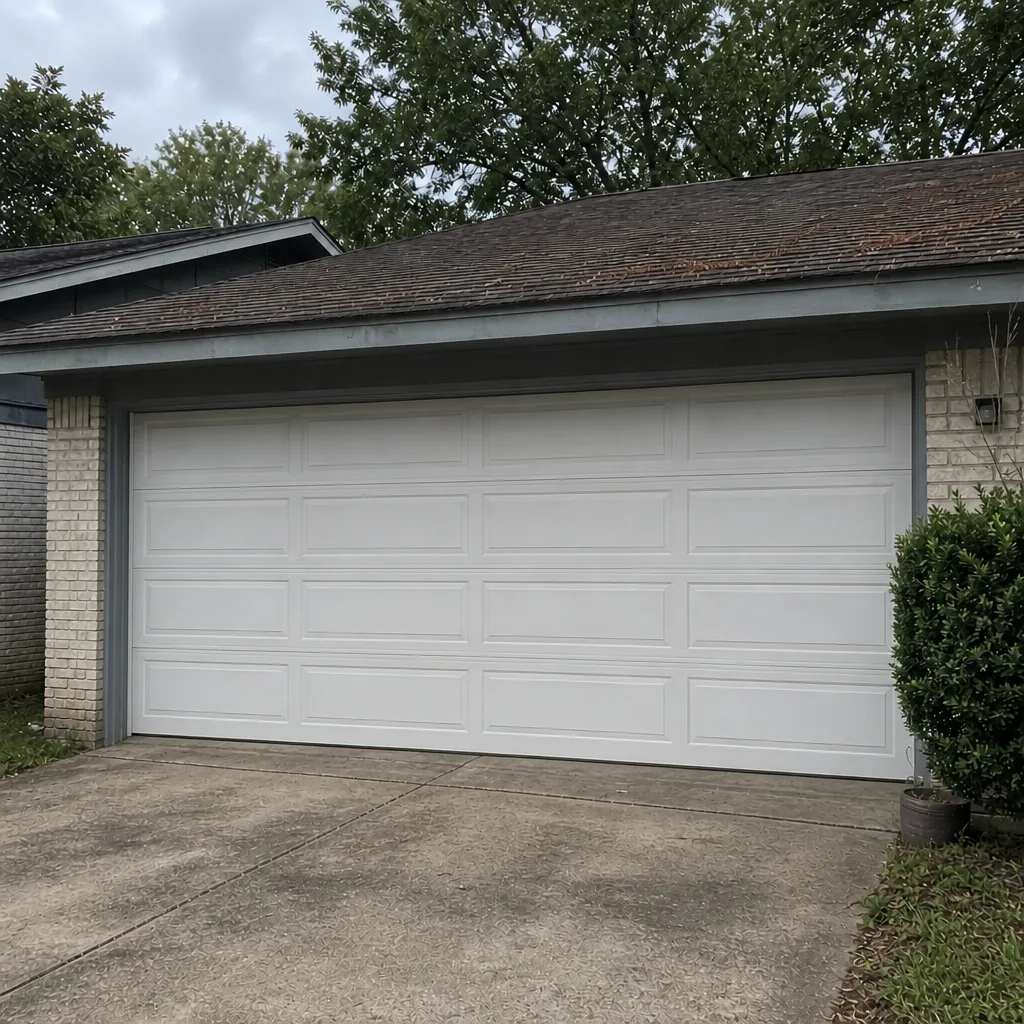
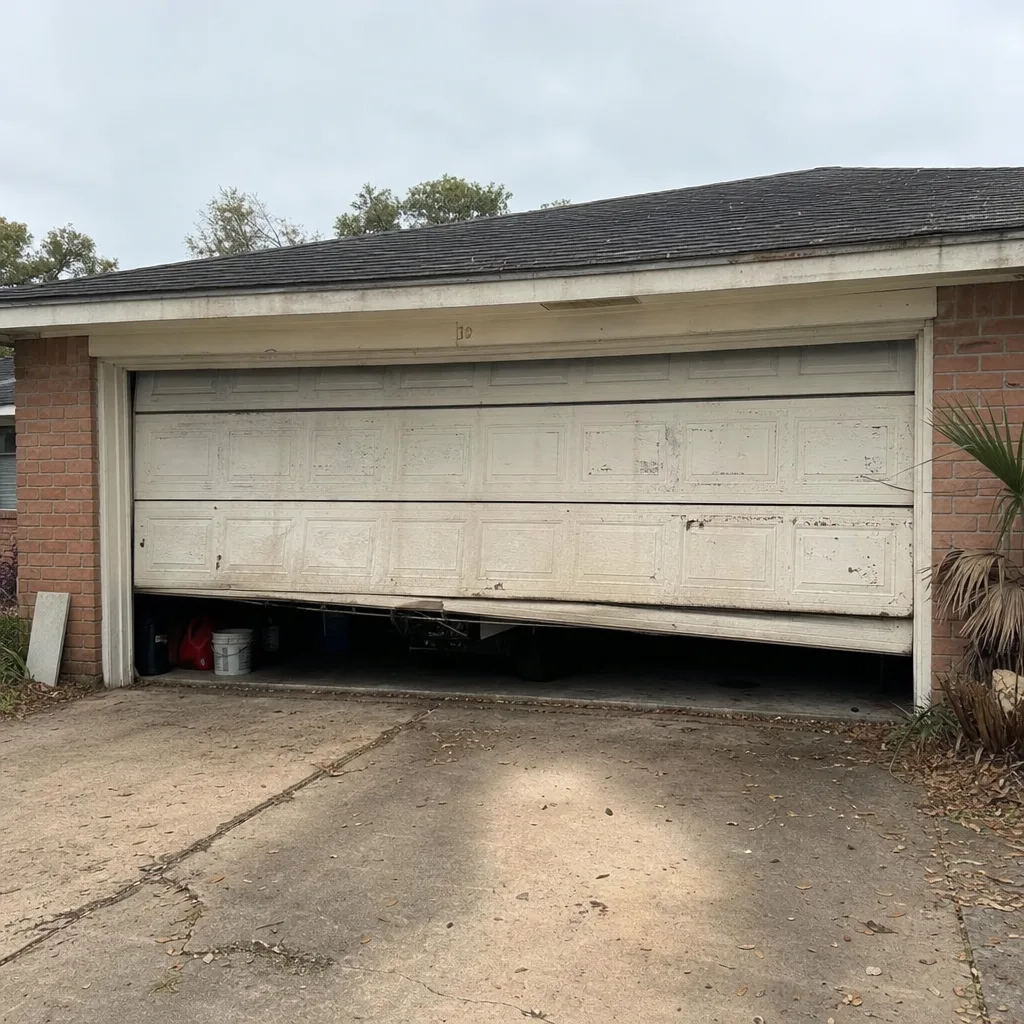
See the difference
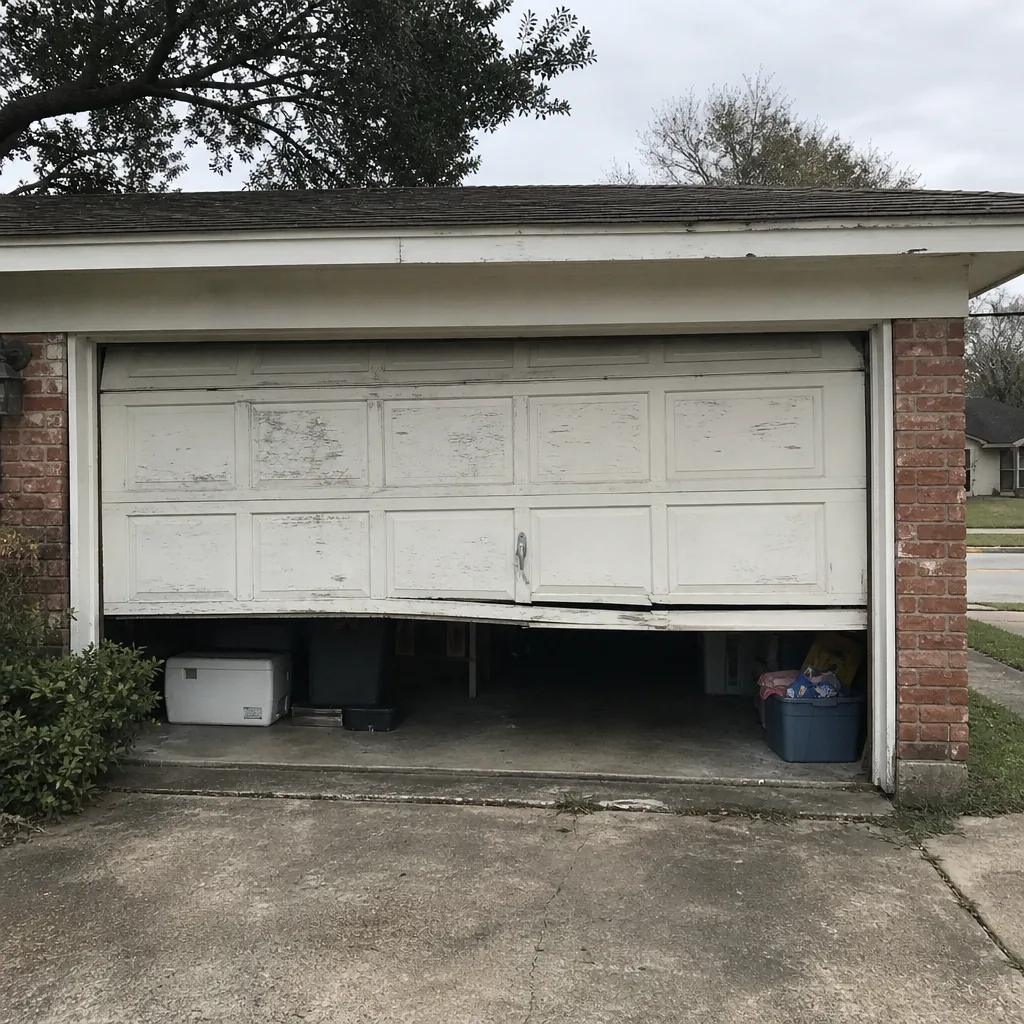 Before
 After
 Before
 After
 Before
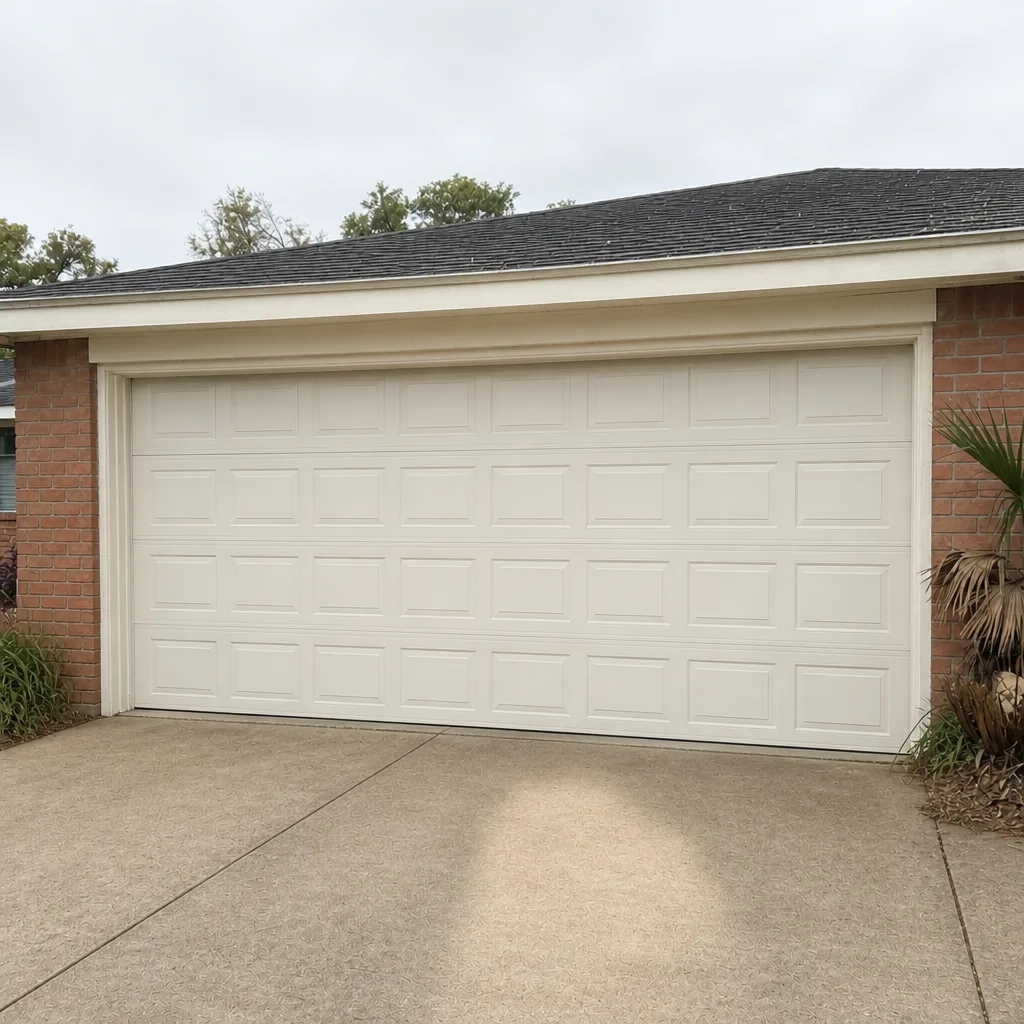 After
When to Call a Professional
Some garage door issues are genuinely dangerous to attempt yourself. A torsion spring or cable that snaps, frays, or loses tension creates a high-tension hazard that has injured plenty of homeowners trying to save a few hundred dollars. If the door has dropped, become stuck, or one side is sagging, or if the opener is straining to lift the door, or if you hear a bang from the garage and the door won’t lift, those are all reasons to call. Same-day service is often available for real failures. If the door is simply stuck and won’t budge, or the opener is making a noise it never made before, the cost of a diagnosis is small compared to the risk of a bad repair. If you’re not sure whether your issue qualifies, call and describe it; we can usually tell you over the phone whether it’s worth same-day attention or can wait for a scheduled appointment. Garage Door Repair Meyerland offers free estimates in Meyerland and across the area; call (866) 937-7492. We answer 24/7, with fast dispatch from 7am to 7pm, Sunday through Friday.
Frequently Asked Questions
Most common garage door repairs in Meyerland in 2026 run $150 to $450 depending on the part. A single torsion spring is $180 to $340, a pair is about twice that, cable replacement is $120 to $250, and roller tune-ups are $150 to $400. Opener repairs are $120 to $350, and a full door install is $1,200 to $4,000 or more. Call (866) 937-7492 for an exact quote; estimates are free.
Post-storm pricing spikes are driven by demand, not by any change in the job. Parts go on backorder, crews are booked out, and some operators raise prices because the market allows it. A spring replacement that runs $180 to $340 in a calm month can see quotes at the high end or beyond during a surge. Getting the number in writing and comparing it to the ranges in this guide is the best protection. Call (866) 937-7492 for an exact quote; estimates are free.
It depends on what happened. Sudden, covered damage from a storm, falling limb, or vehicle impact is more likely to be covered than a door that failed from age or wear. Flood damage is usually a separate rider, not standard. Photograph before cleanup, keep damaged parts, and get two written estimates. Call (866) 937-7492 for an exact quote; estimates are free.
For many Meyerland homeowners, yes. A mid-grade wind-rated door costs more upfront ($2,500 to $3,500 compared with $1,200 for basic steel), but it survives storms better, lasts longer, and returns value at resale in a flood-corridor neighborhood. The five-year math often breaks even by year three or four. Call (866) 937-7492 for an exact quote; estimates are free.
Same-day service is often available for a snapped spring, a stuck door, or a failed opener, and a spring is one of the calls we treat as urgent. We answer 24/7. A call outside dispatch hours is booked into the next opening, Sunday through Friday, 7am to 7pm. Call (866) 937-7492 for an exact quote; estimates are free.
No, not if the written estimate is accurate. We quote the price in writing before any work starts, and the price you approve is the price. If the on-site inspection turns up a different problem than expected (a cracked panel under a failed spring, for example), we’ll tell you before touching anything. Call (866) 937-7492 for an exact quote; estimates are free.
The Bottom Line
Garage door pricing in Meyerland is shaped by factors national cost guides miss: post-storm demand surges, non-standard rough openings in mid-century homes, and the real premium on wind-rated and flood-appropriate products. The numbers that matter are the ones you compare against your quote, so use the ranges in this guide as a filter, not a fixed script. A fair quote falls within range, itemizes parts and labor, and is written down before work starts. A padded quote resists scrutiny. When in doubt, ask for the breakdown. Then decide. Our technicians have up to 14 years of experience on the brands most Meyerland homes actually have: LiftMaster, Chamberlain, Clopay, Amarr, Wayne Dalton, Craftsman, Genie, and Raynor. From a snapped spring to a full installation, it’s one call. Call (866) 937-7492. We answer 24/7, with fast dispatch from 7am to 7pm, Sunday through Friday.
For a full look at the services we provide, start with Garage Door Repair Meyerland.
Written by the team at Garage Door Repair Meyerland.