
Last updated November 21, 2026
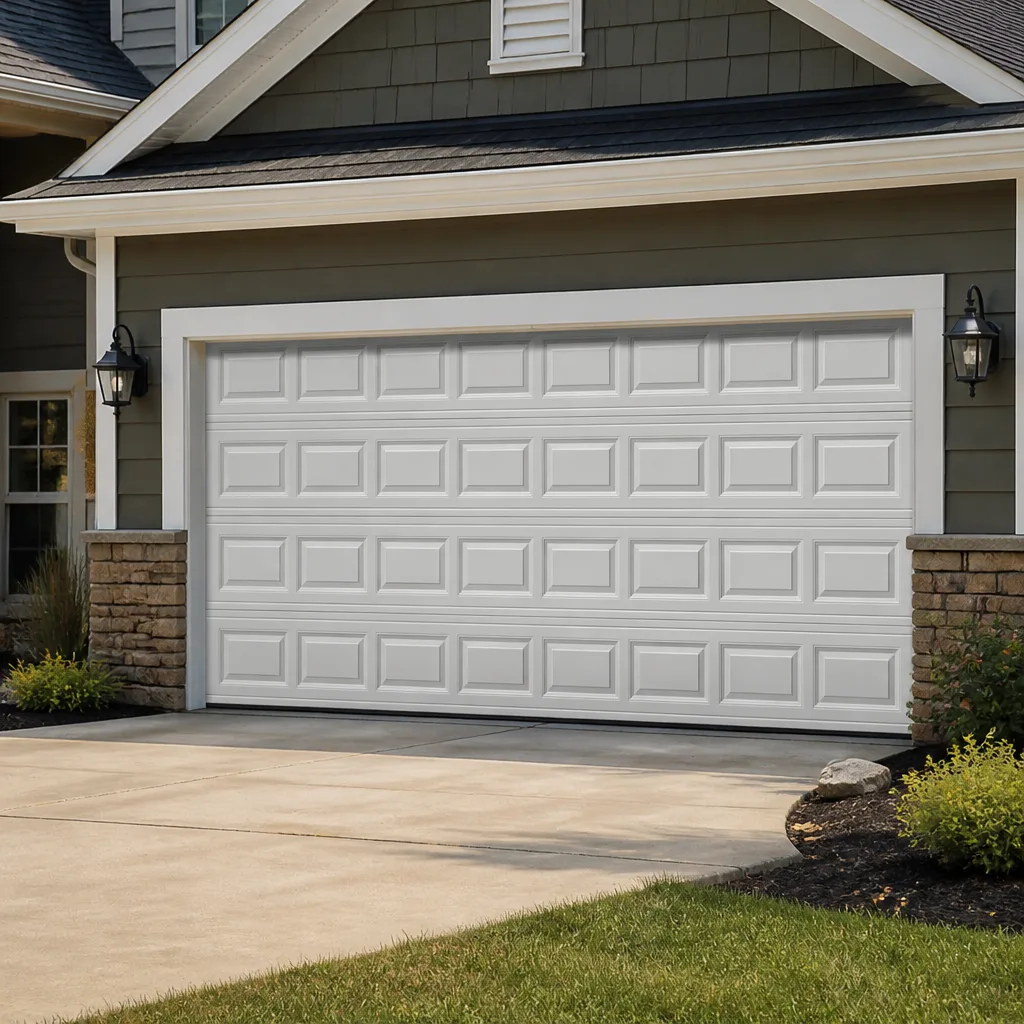 Raised-panel steel
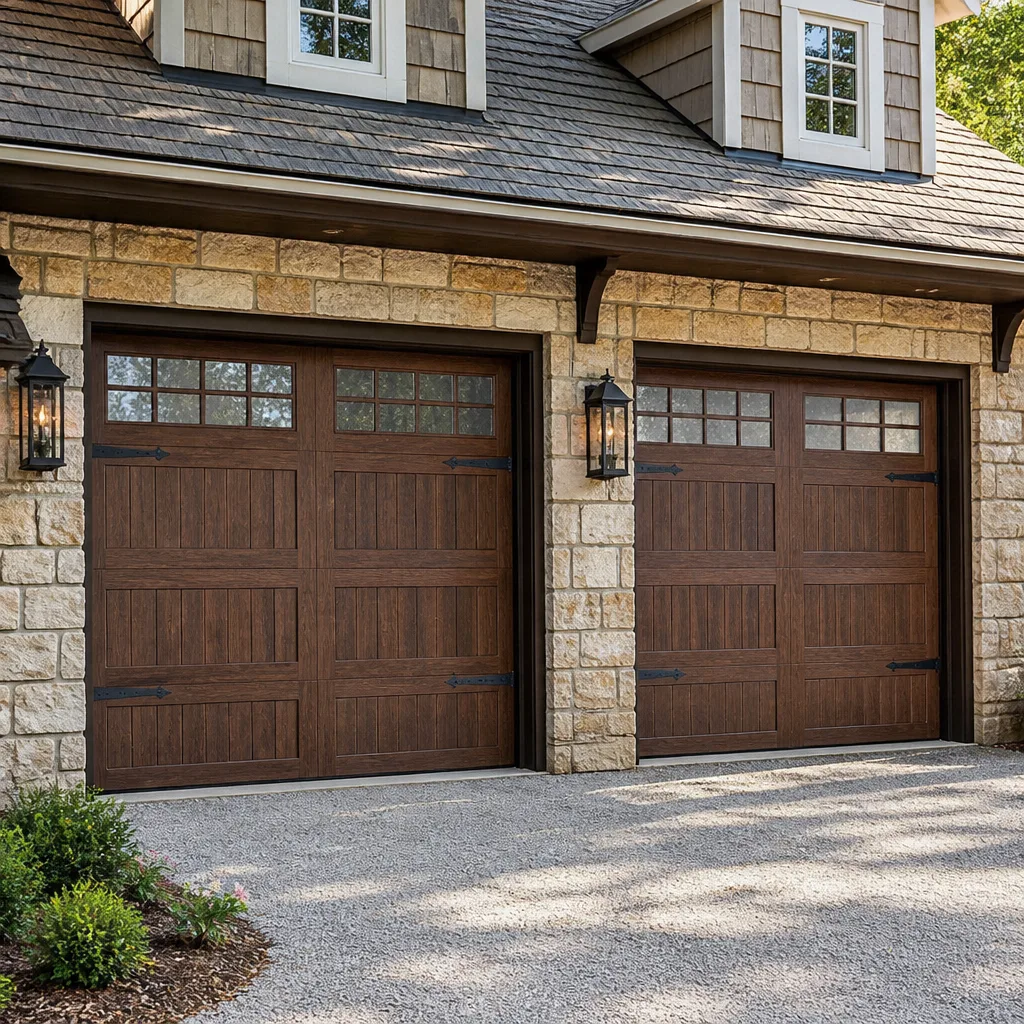 Carriage house
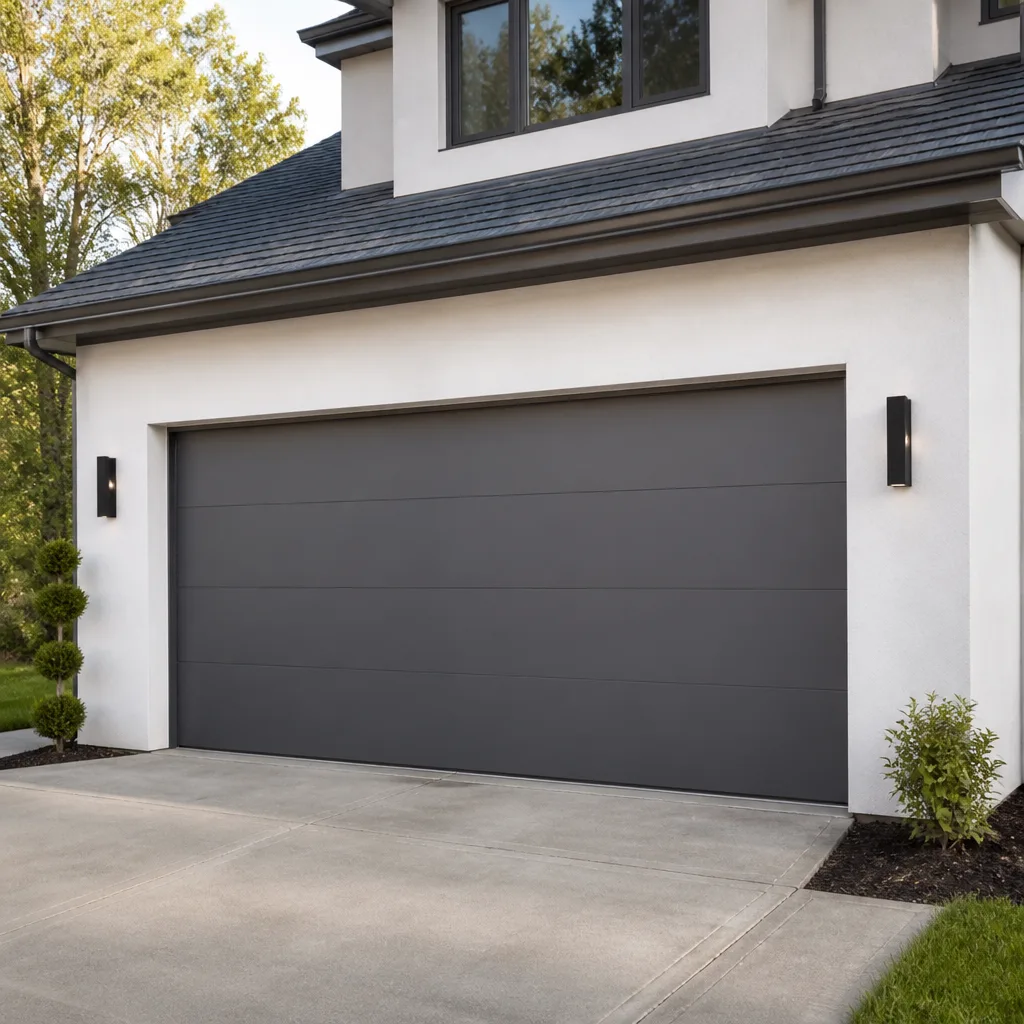 Modern flush
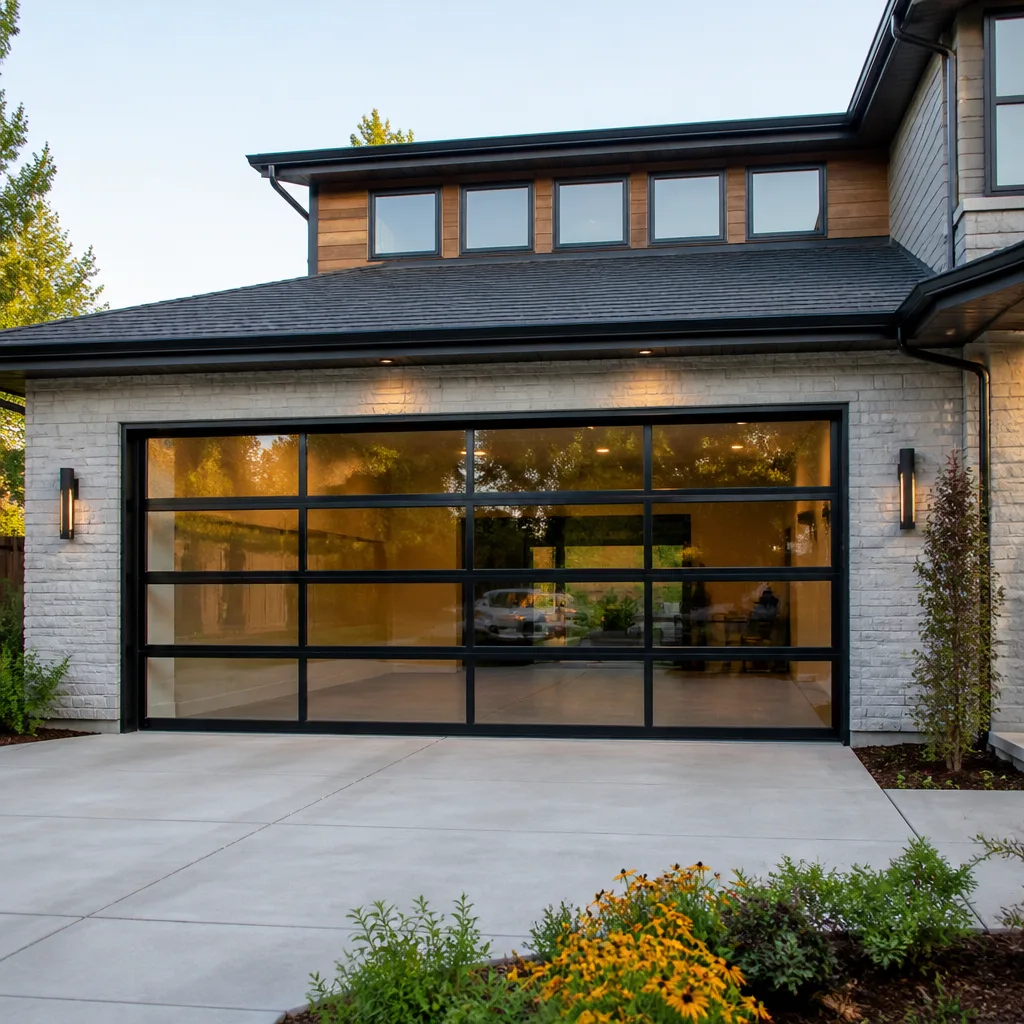 Full-view glass
 LiftMaster openers
 Chamberlain openers
Full 25-point door and opener safety check with every visit - springs, cables, rollers, tracks, and your LiftMaster or Chamberlain opener included
You get a price before we start. It does not change when the pro arrives.
Get your free estimateGarage Door Warning Signs: A Meyerland Homeowner’s Reference Guide
A garage door that takes two seconds longer to open than it did six months ago isn’t “getting old.” It’s telling you that spring tension has dropped, the opener is compensating with more torque, and both are closer to failure than they were last season. Most garage door breakdowns we see in Meyerland don’t arrive out of nowhere. They send signals for weeks first: a new rattle, a thin shaft of daylight under one corner, a pop that shows up only when the door is cold. The problem is that homeowners don’t know which sounds and movements are normal variation and which are early-stage mechanical failure. This guide decodes those signals. You’ll learn what each noise points to at the component level, how to run the manual lift test, and how to tell a warning sign that gives you weeks to schedule a repair from one that means stop using the door today.
Quick Answer
The most common garage door warning signs are a door that opens slower than it used to, grinding or popping noises during travel, a gap of daylight under one corner when closed, an opener that strains or reverses, and rust or gaps at the spring coils. In Meyerland, the earliest signals usually show up at the springs and the door’s balance point rather than the opener itself. Any door that won’t stay up when you lift it by hand, or that drops hard, has a spring problem and shouldn’t be used until a trained technician looks at it.
Styles & brands we work with
- Raised-panel steel
- Carriage house
- Modern flush
- Full-view glass
- LiftMaster openers
- Chamberlain openers
Table of Contents
- Symptom-to-Cause Reference Table
- What Each Noise Is Telling You
- Visual Cues That Are Easy to Dismiss
- The Manual Lift Test
- Weeks to Schedule vs. Stop Using the Door Today
- What Shows Up First on Meyerland’s Housing Stock
- Opener Warning Signs on Older and Smart Units
- Common Mistakes to Avoid
Symptom-to-Cause Reference Table
This is the fastest way to narrow a problem down. Match what you’re seeing or hearing to the component it usually points to, then decide how urgently to act. The right-hand column is the one that matters most, because it tells you whether you can wait for a scheduled visit or need to stop using the door right now.
| Symptom | Likely Component | Urgency |
|---|---|---|
| Loud bang from above, door suddenly heavy | Broken torsion spring | Stop using the door today |
| Door drops fast or slams shut | Spring or cable failure | Stop using the door today |
| Grinding during travel | Worn rollers, dry or damaged track | Schedule a repair this week |
| Popping when the door moves | Loose panels, track joints, hinge wear | Schedule when convenient |
| High-pitched squeal | Dry rollers, hinges, or spring coils | Schedule when convenient |
| Clicking that repeats without movement | Opener gear, logic board, or safety sensor | Schedule a repair this week |
| Daylight under one corner | Uneven track, bent panel, or track out of plumb | Schedule a repair this week |
| Door reverses before closing | Safety sensor alignment or sensitivity setting | Check, then schedule |
Treat the table as a starting point, not a diagnosis. Two symptoms together, like a squeal and a slow open, usually point to a single worn part that’s putting extra load on everything else. That’s the kind of pattern a technician reads in a few minutes. If you’d rather skip the guessing, our garage door repair team can walk the whole system with you.
What Each Noise Is Telling You
Noise is the most honest signal a garage door gives you, because every sound maps to a specific contact point in the system. A door that’s working correctly makes a low, steady hum from the opener and a soft roll from the panels. Anything sharper than that is worth decoding.
- Grinding. Metal dragging on metal. Most often worn steel rollers that have lost their bearings, or a track that’s slightly out of alignment so the roller is riding the edge instead of the channel. Grinding left alone wears the track and eventually cracks a panel edge.
- Popping. Usually a panel hinge or a track joint that’s shifting under load. On wood-panel doors it can also be a panel seam flexing. A single pop at one spot on the travel means one joint; popping throughout the travel means the door is out of balance.
- Squealing. Friction at the rollers, hinges, or spring coils that need lubrication. Squealing is the cheapest warning sign to fix and the easiest to ignore until it turns into grinding.
- Clicking. This one belongs to the opener more often than the door. A repeating click without door movement points to the opener’s gear, travel limits, or a safety sensor that keeps interrupting the cycle.
- A single loud bang. Torsion spring failure. It sounds like a gunshot or a heavy book hitting the floor. The door becomes extremely heavy immediately, and it should not be operated.
Where the noise happens tells you as much as the noise itself. Grinding at the start of travel points to the rollers at the bottom of the track. Grinding near the top points to the top rollers or the drum. And a squeal that only appears in cool weather is usually lubrication that thins out when the morning is cooler than the afternoon, which describes a lot of mornings in Meyerland.
Visual Cues That Are Easy to Dismiss
Visual cues are the quiet signals. They rarely cause a failure on their own, but together they chart a door that’s drifting out of adjustment. Walk around your door with it closed and look at three things.
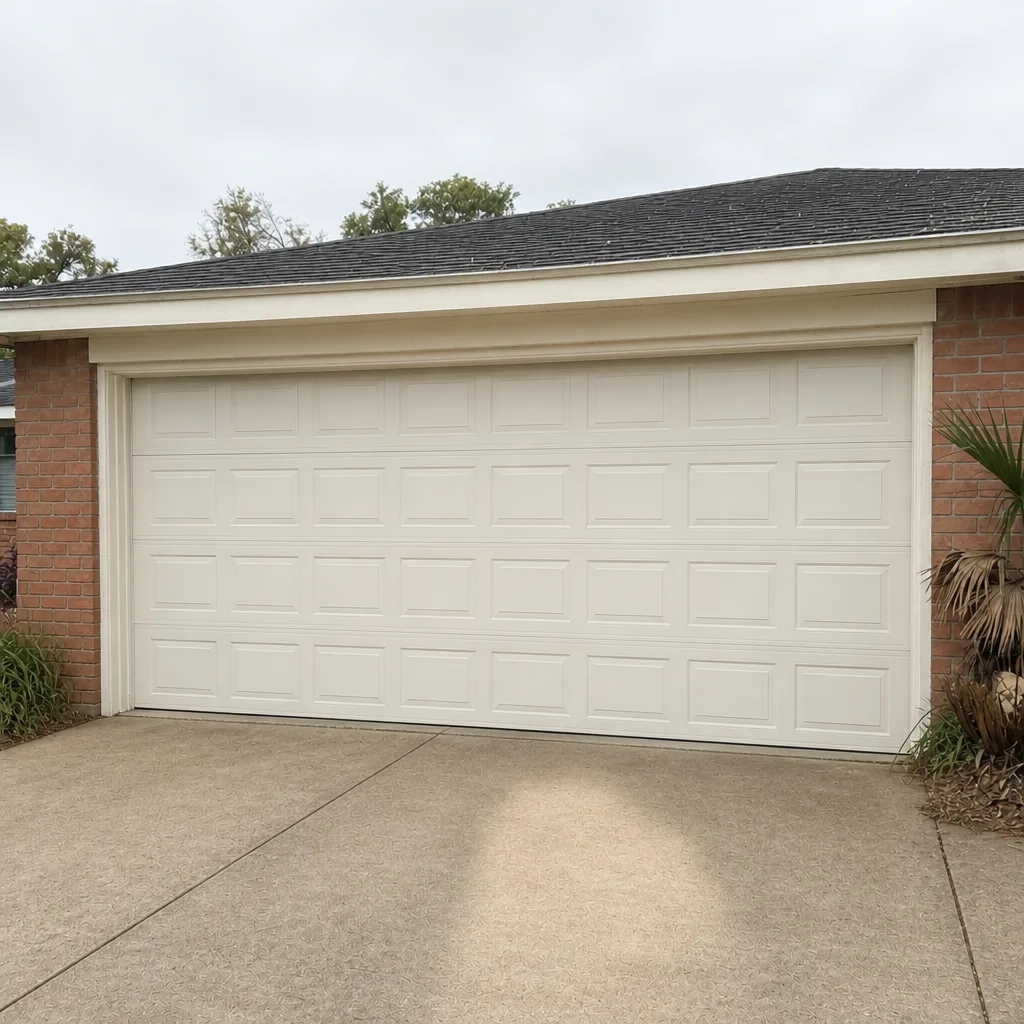
- The gap under the closed door. A thin, even line of daylight all the way across is normal. A wedge of light at one corner, or a gap that’s wide at one end and gone at the other, means the door is sitting crooked. That’s usually a track out of plumb or a bent bottom section. It also lets water and pests in, which matters more here than in drier parts of the state.
- The reveal at the top corners. Stand back and compare the space between the door’s top edge and the header at both corners. If one side sits higher than the other, the door is traveling unevenly. This is one of the first things to check when a door starts rubbing.
- Paint cracking along panel seams. Cracks that follow the seams between sections mean those seams are flexing more than they should. On steel doors this often shows as a hairline crack along a fold; on wood-panel doors it can mean moisture has gotten into a seam and the panel is starting to delaminate.
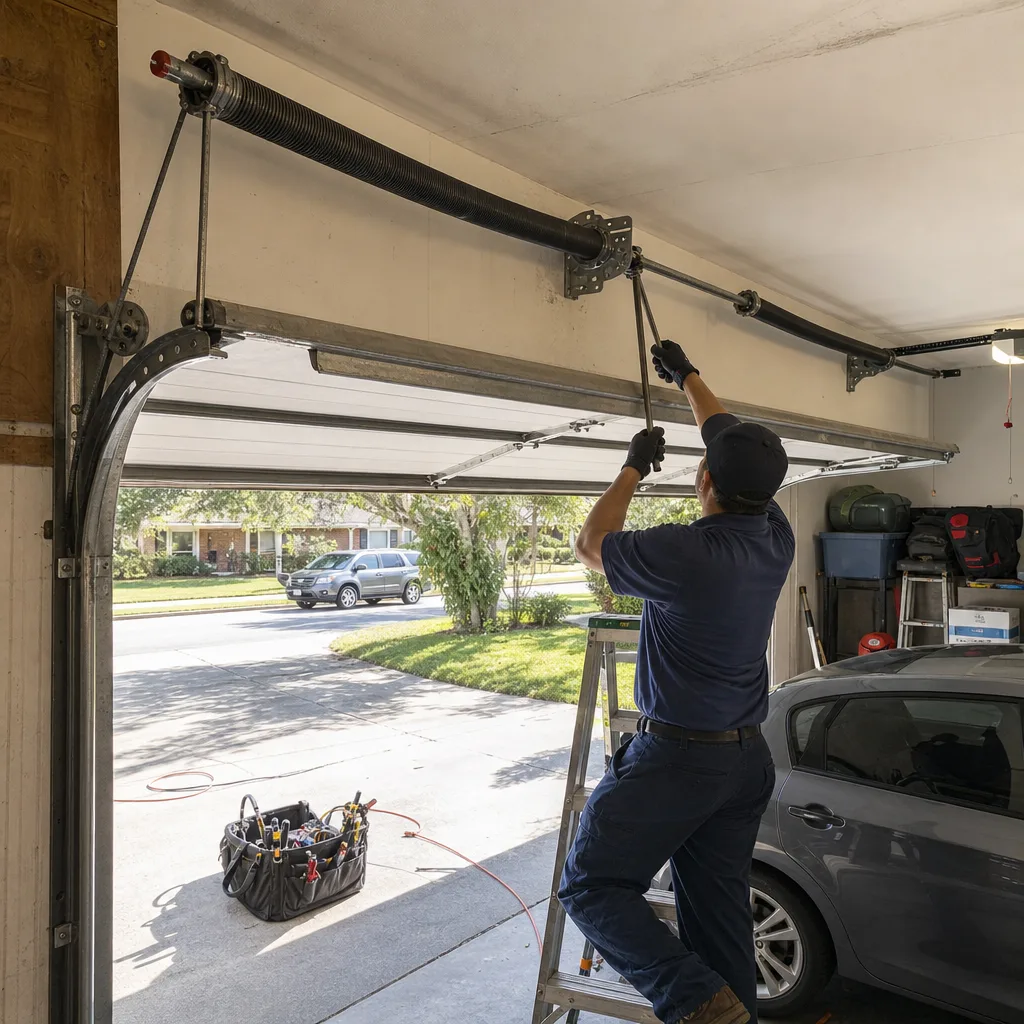
You can also check the springs themselves. Look for gaps in the coil, a stretched section, or rust that’s flaking off in sheets. A spring with a visible gap has probably already broken, even if the door still moves. Rust isn’t a failure by itself, but a rusty spring is a spring that’s closer to the end of its life. None of this requires touching anything. Visual checks are safe with the door closed and the opener off.
The Manual Lift Test
This is the single fastest way to know whether your springs are carrying the door’s weight correctly or whether the opener is doing a job it wasn’t built for. A garage door opener is designed to guide a balanced door, not to lift its full weight. When the springs weaken, the opener quietly takes on the load, and that’s when it burns out, strips a gear, or tears the mounting bracket out of the ceiling.
Before you start, pull the emergency release cord (the red handle hanging from the opener rail) so the door is disconnected from the motor. Then follow these steps:
- Lift the door with one hand to about waist height. It should feel light, like lifting a well-balanced bicycle, not heavy like lifting a car hood.
- Let go at waist height. A balanced door stays put. If it sinks slowly, the springs are weak. If it drops, they’re failing.
- Lift it to shoulder height and let go again. It should hold roughly where you release it. If it wants to fall, the springs are under tensioned; if it springs up, they may be overtensioned.
- Reconnect the door by pulling the release cord back toward the opener, then run the door once with the opener to confirm it cycles normally.
A door that fails the lift test needs a spring adjustment or replacement. Spring work is also the repair we most often say no to DIY on, because the torsion springs on most Meyerland doors store enough force to break a bone or worse if they let go during handling. The test above is safe because you’re only lifting a disconnected door by hand. Working on the springs themselves is not safe. That’s a trained-technician job, and it’s where our shop focuses more than anywhere else. If the lift test fails, stop and call us at (866) 937-7492. We answer 24/7.
Weeks to Schedule vs. Stop Using the Door Today
The single most useful question is whether a warning sign means “make an appointment this month” or “walk, don’t drive, past this door.” The distinction is almost always about weight and tension, not about noise. If the door is still moving under balanced spring tension, you have time. If the springs are compromised, you don’t.
Signs you have weeks
- Grinding, squealing, or popping that hasn’t changed in pitch or frequency
- A gap under one corner with a door that still opens and closes under its own power
- Paint cracks along seams with no visible panel movement
- An opener that runs slower or louder than before, but still completes each cycle
Signs you stop using the door today
- A loud bang followed by a door that suddenly feels extremely heavy by hand
- A door that drops fast or slams rather than settling
- A snapped cable (a loose, whipping steel line along one side of the door)
- A door hanging crooked and off its track, or one panel visibly bowed
- Any door where the opener pulls the door up but you can see the springs sagging
If you’re on the fence, err toward stopping. A door held up by the opener alone is being pulled by its weakest link, and that link is where failures happen. Call us at (866) 937-7492. We answer 24/7: a call outside dispatch hours is booked into the next opening, Sunday through Friday, 7am to 7pm. Our technicians have up to 14 years of experience and can usually tell you within a few minutes which side of that line your door is on.
What Shows Up First on Meyerland’s Housing Stock
Warning signs look different depending on the door, and in Meyerland the door on your house is a good clue to which signs you’ll see first. The neighborhood runs from ranch homes built in the mid-century boom to post-2000 construction with newer steel doors, and the two age differently.
Wood-panel doors on older ranch homes
These are often the original doors or replacements that have been on the house for many years. On wood-panel doors, the first sign is usually moisture-related. Wood swells and shrinks with humidity, so a panel seam that was tight in February can open up by summer. Look for hairline cracks along panel seams, paint that’s lifting at the bottom edge, and slight sag in the middle of the door. A warped wood panel puts extra load on the rollers and the springs, and the imbalance shows up as uneven travel. Wood doors also feel heavier on the lift test as the wood ages and holds more moisture.
Steel doors on post-2000 construction
On newer steel doors, the first sign is usually mechanical, not moisture. Steel doors are lighter and more dimensionally stable, so you’ll hear a grinding roller or a popping hinge before you see any panel damage. The insulation layer inside a steel door can also shrink away from the skin over time, and what looks like a bowed panel is sometimes just the foam settling. Check the rollers and the track alignment first on these doors, and the springs second.
In both cases, the seasons here push the same direction. Meyerland’s summers run hot and humid and the winters are mild but not dry, so swings in humidity matter more than temperature. A door that passed the lift test in the cooler months can fail it by late summer. That’s why we suggest running the test twice a year, once in each season, rather than only when something sounds wrong. Whatever the door and whatever the brand – Wayne Dalton, Clopay, Amarr, and the rest of the eight we work on – the lift test is the same.
Opener Warning Signs on Older and Smart Units
The opener is the part homeowners notice last, because it sits overhead and does its work quietly until it doesn’t. Opener warning signs split into two categories: mechanical and electronic.
Mechanical signs (older units)
- Straining under load. If the door is heavy and the opener still lifts it, you can hear the motor working harder. That’s the opener doing spring work, and the motor or gear will fail if the springs aren’t fixed.
- A rattle or clunk at startup. Often a worn drive gear or loose chain. On chain-drive LiftMaster and Craftsman units, a slack chain clunks and slaps against the rail.
- Reversing before the door is fully closed. Usually the safety sensor or the close-force setting. If it happens repeatedly, the opener is protecting itself or you.
- Stopping partway. Travel limits out of adjustment or a logic board that’s starting to fail.
Electronic signs (smart and Wi-Fi units)
- Wi-Fi drops or app disconnects. Often a weak signal to the opener’s module, not a failing motor.
- Delayed response from the remote or app. Usually a battery, an antenna, or a hub issue, but worth checking against the door’s balance before assuming it’s just the app.
- Error codes or blinking lights. Each brand uses a different blink pattern; LiftMaster myQ, Chamberlain, and Genie Aladdin Connect each signal differently.
A struggling opener is often a symptom of a door problem, not the problem itself. That’s why we check the door first and the opener second. If the opener has genuinely failed, or your Wi-Fi module needs a replacement, we handle garage door opener repair across both older mechanical units and current smart-home models. Call (866) 937-7492. Estimates are free, and the price is quoted and agreed before any work starts.
What to Check Every Season
A five-minute routine once per season catches most of what this guide describes. None of it requires tools or working on the springs, hinges under tension, or anything attached to the opener with the power on.
- Run the manual lift test. Door disconnected, lift to waist height, let go. It should stay put.
- Listen for change. Run the door once and listen. Compare what you hear to last season, not to a YouTube video.
- Look under the closed door. A wedge of daylight at one corner means the door is sitting crooked.
- Compare the top corners. One side higher than the other means uneven travel.
- Check the springs for gaps and rust. Look, don’t touch.
- Test the safety sensors. Pass an object through the beam while the door is closing. The door should reverse. If not, clean the lenses and check alignment.
If anything fails, the fix is usually cheap when it’s caught early and more expensive when it isn’t. The most common story we hear is a homeowner who waited on a squeal until the grinding started, then waited on the grinding until the door came off its track. Each stage in that sequence adds parts to the repair.
See the difference
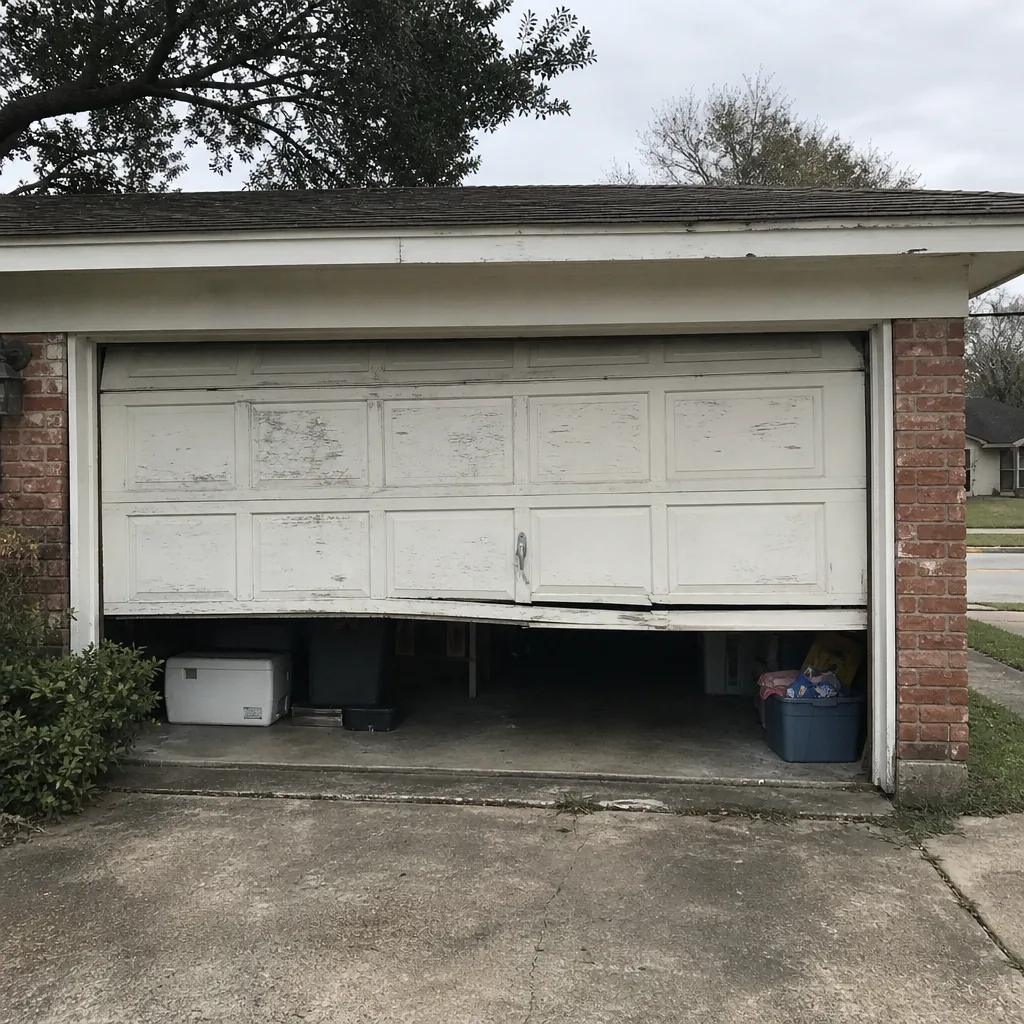 Before
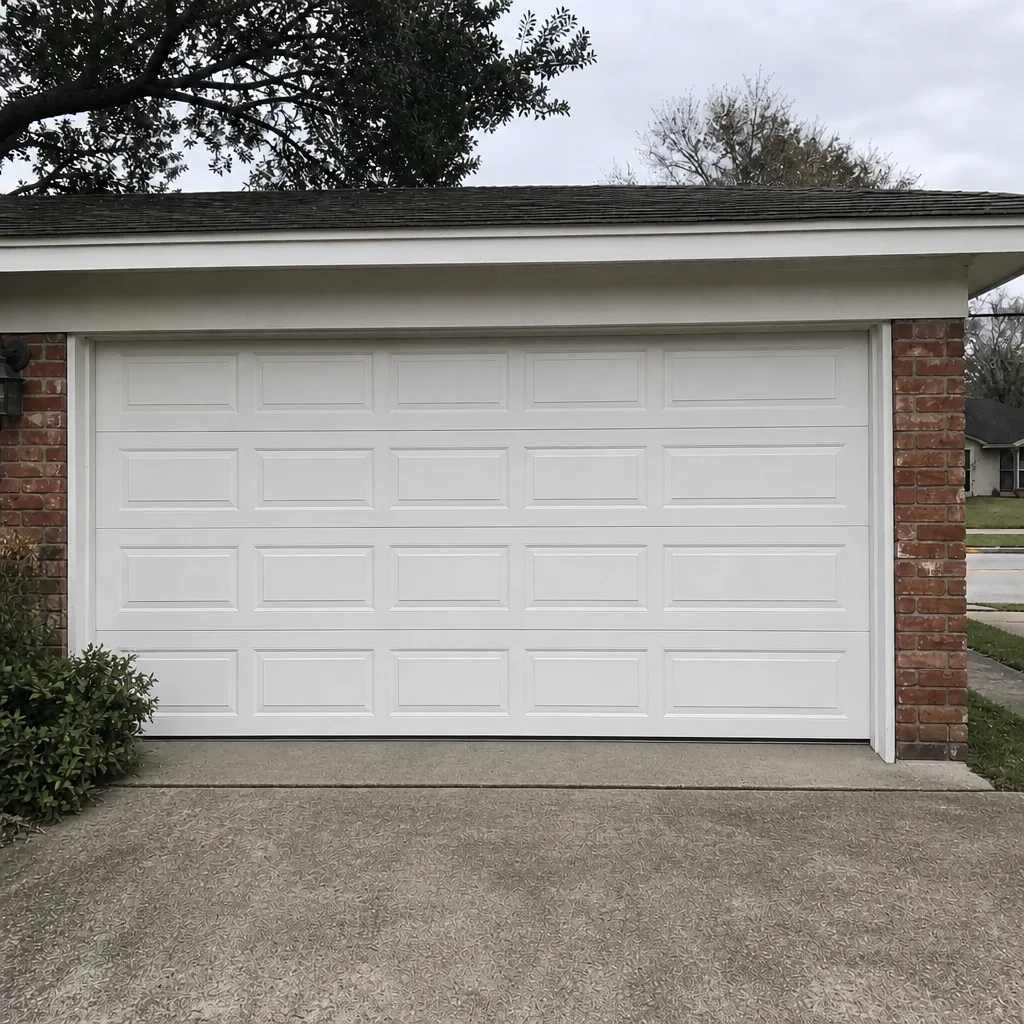 After
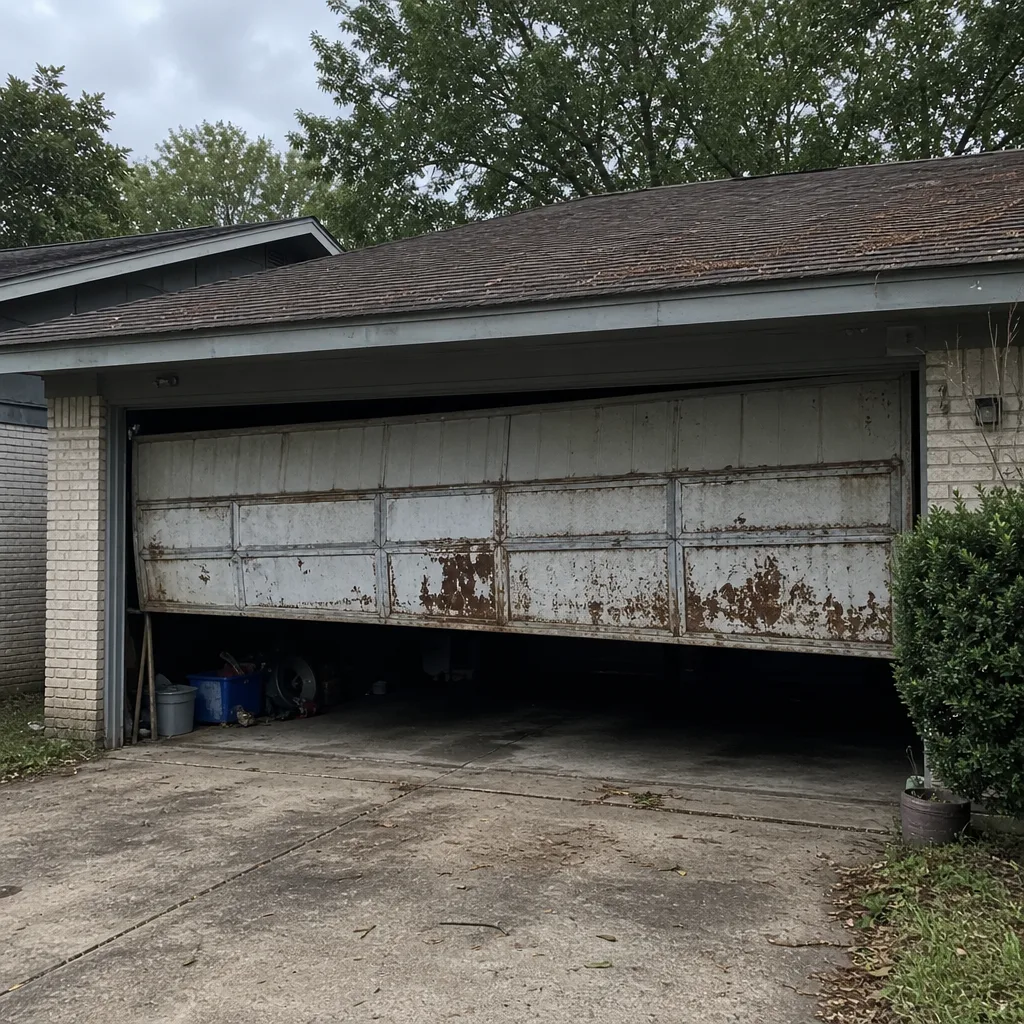 Before
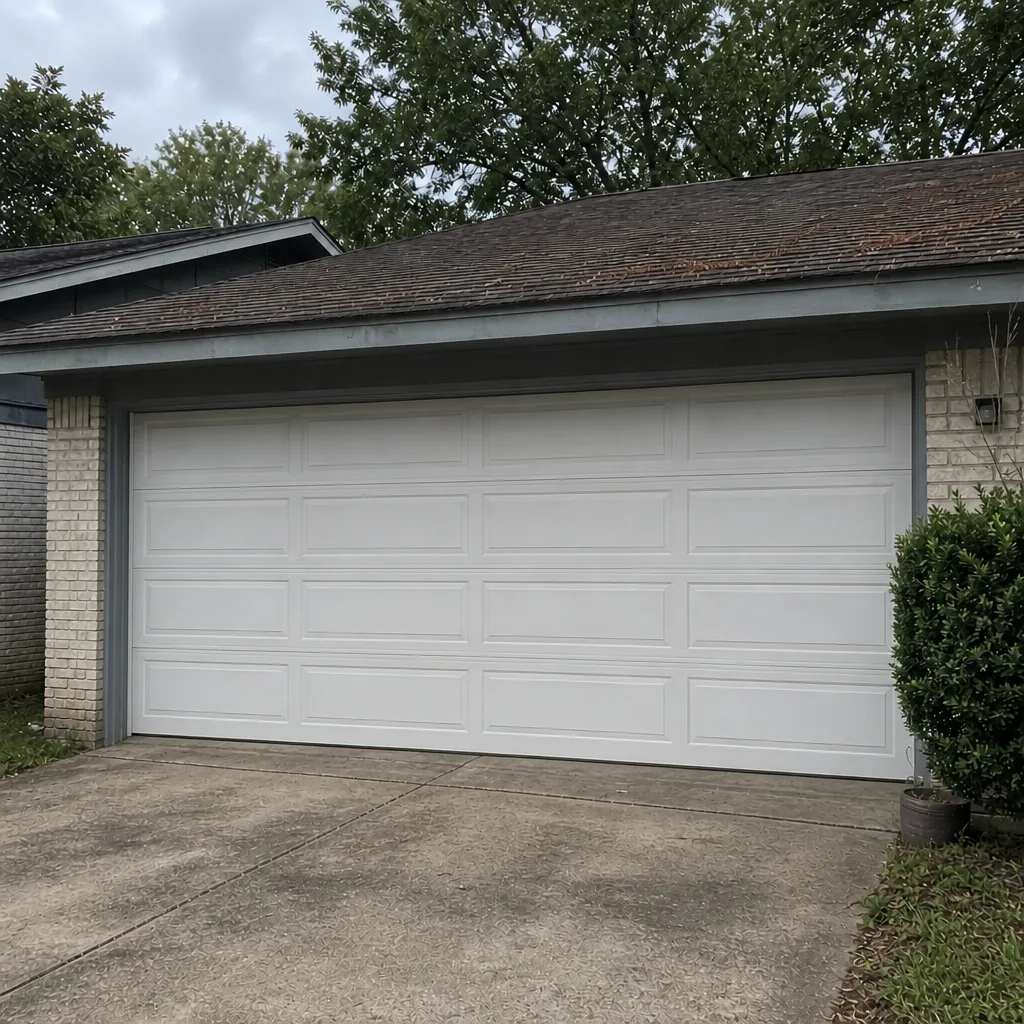 After
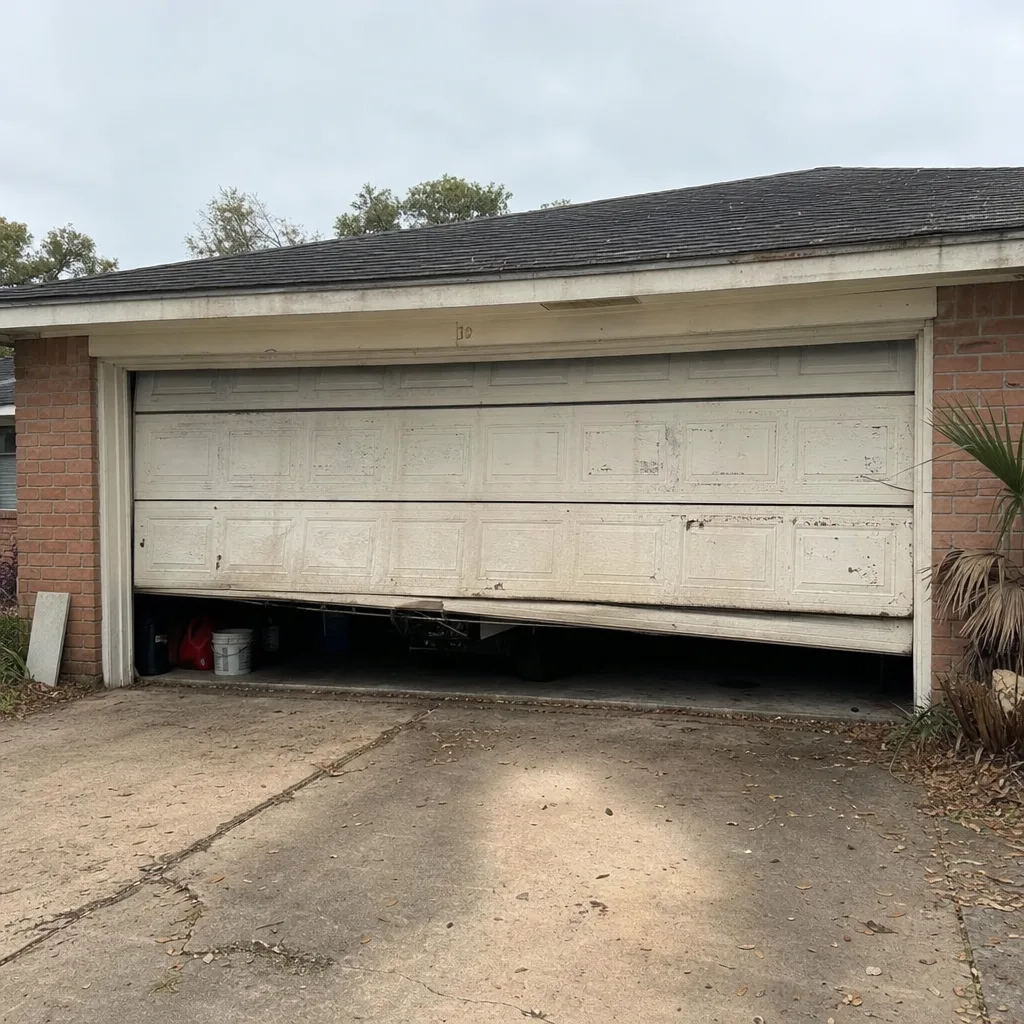 Before
 After
Common Mistakes to Avoid
These are the ones we see most often in Meyerland, and each one turns a small repair into a larger one.
- Greasing the springs and calling it done. Lubrication is a good seasonal habit, but it doesn’t fix tension. A squeal that goes away after lubrication can still be a spring that’s dropped tension, and the lift test is what tells you.
- Forcing a door that’s off its track. If the door is hanging crooked, running the opener can bend the track or crack a panel. Leave it down and call.
- Adjusting torsion springs yourself. Spring work is the single most dangerous DIY repair in this trade. The tension in a wound torsion spring is enormous, and it doesn’t announce itself before it releases. This one is for a trained technician, every time.
- Ignoring a slow open because the door “still works.” A door that opens slower than it did six months ago is a door whose springs have lost tension. The opener is covering for it right now, and it won’t forever.
- Replacing the opener to fix a door problem. If the door is heavy, a new opener will struggle just as much as the old one. Balance first, then the opener.
- Deferring the lift test to “when it gets worse.” The lift test is free, takes a minute, and is the best predictor you have. Do it before the door fails, not after.
- Assuming a loud noise was “just the door settling.” A single loud bang is almost always a snapped spring. If you hear one, stop and check the lift test before running the opener again.
When to Call a Professional
Call us when a door fails the lift test, when a spring has visibly cracked or the door has become heavy by hand, when a cable is loose or snapped, when the door is hanging off its track, or when the opener runs but the door doesn’t move. Also call when grinding or popping has become louder over a few weeks, because that’s a wear pattern that’s accelerating. Anything involving the springs, the cables, or the door coming out of balance is a trained-hands job, and it’s the one repair we’d never talk a homeowner through over the phone. Garage Door Repair Meyerland offers free estimates in Meyerland. Call (866) 937-7492. We answer 24/7, with fast dispatch from 7am to 7pm, Sunday through Friday. Whatever the door, whatever the brand, we’ll tell you what’s failing and what it takes to fix it, and the price is quoted and agreed before any work starts.
Frequently Asked Questions
The first signs are usually a door that opens slower than it used to, a new grinding or popping noise, and a gap of daylight under one corner when closed. In Meyerland, the earliest signal is most often a drop in spring tension that the opener quietly compensates for. Run the manual lift test to confirm. Call (866) 937-7492 for an exact quote. Estimates are free.
It depends on the part and the system. Broken torsion spring repair for one spring is typically in the $180 to $340 range; a matched pair is usually replaced together, so a pair typically runs about twice that. Roller, hinge, and track repairs generally cost less. Opener repairs depend on the part and the brand. The written estimate is the price, and it’s quoted and agreed before any work starts. Call (866) 937-7492 for an exact quote. Estimates are free.
Often yes. Same-day repair is available for failing doors and openers, and fast dispatch runs from 7am to 7pm, Sunday through Friday. We answer 24/7; a call outside dispatch hours is booked into the next opening. Call (866) 937-7492 for an exact quote. Estimates are free.
No. The written estimate is the price, and the price is quoted and agreed before any work starts. If the technician finds a second problem while working, you’ll hear about it before anything is done. Call (866) 937-7492 for an exact quote. Estimates are free.
Yes. The local pro who comes to your home is licensed and insured as their state requires, and the technicians who handle spring work are trained specifically on high-tension torsion and extension spring repair. Call (866) 937-7492 for an exact quote. Estimates are free.
The signs are similar, but the timing shifts. Meyerland’s hot, humid summers and mild, humid winters mean wood-panel doors on the older ranch homes swell and shrink with the seasons more than steel doors do, so seam cracks and slight sag show up first there. On the steel doors of post-2000 construction, worn rollers and popping hinges show up first. Running the lift test twice a year catches most of what matters. Call (866) 937-7492 for an exact quote. Estimates are free.
The Bottom Line
Garage doors rarely fail without warning. A slower open, a new grind, a wedge of daylight under one corner, a seam that’s starting to crack: each one is a message from a specific part, and most of them give you weeks to schedule a repair if you know how to read them. The manual lift test is the fastest way to tell whether you have weeks or need to stop using the door today. In Meyerland, run it twice a year and you’ll catch the big problems while they’re still small. If you’d rather skip the reading, the team here is one call away. If a repair isn’t cost-effective and you’re weighing a new door, we also handle garage door installation across the same eight brands, so it’s one company, one visit, one estimate. Call (866) 937-7492. We answer 24/7. Fast dispatch from 7am to 7pm, Sunday through Friday. Or start at Garage Door Repair Meyerland to see everything we do.
Written by the team at Garage Door Repair Meyerland.